
Revolutionizing E-Bike Prototyping: Berria Bike and Mausa 3D Leverage Additive Manufacturing
The landscape of product development across high-demand industrial sectors is continually evolving, with additive manufacturing emerging as a pivotal tool for accelerated innovation. This advanced technology, commonly known as 3D printing, offers unparalleled advantages in the design, testing, and iteration phases of new products. Its adoption has become particularly prominent in areas where performance, customization, and rapid turnaround are critical, and the bicycle industry is no exception. Recently, the competitive world of high-performance cycling has witnessed a groundbreaking application of this technology, spearheaded by the collaboration between Berria Bike and Mausa 3D. These industry leaders are not merely exploring but actively showcasing the transformative benefits of rapid prototyping, jointly developing the first-ever e-bike prototype produced entirely through cutting-edge 3D printing techniques. This partnership marks a significant milestone, pushing the boundaries of what’s achievable in bicycle manufacturing and design, thereby setting new standards for efficiency and innovation in the development cycle of high-performance electric bikes.
The ‘Mistral’ Project: Defining the Future of E-Cycling with Precision Prototyping
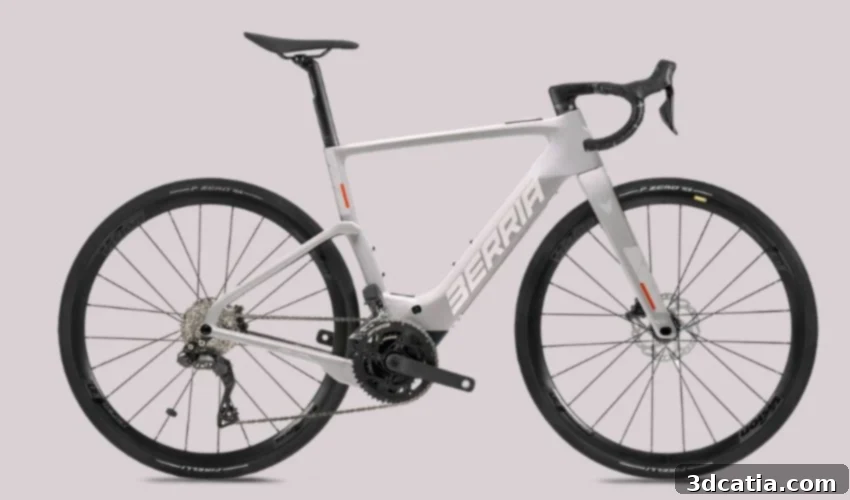
At the heart of this innovative collaboration lies the ambitious goal of bringing the new ‘Mistral’ model to life. The ‘Mistral’ isn’t just another electric bicycle; it represents a new generation of e-road and gravel bikes designed for versatility, exceptional performance, and a remarkably lightweight construction. Engineers at Berria Bike envisioned a bike capable of excelling across varied terrains, from smooth asphalt to challenging gravel paths, all while delivering the exhilarating experience of an electric-assist bicycle. The initial design brief emphasized agility, robust component integration, and rider ergonomics tailored for long-distance comfort and efficiency. However, translating these complex design aspirations into a tangible product, especially one with an electric drivetrain, typically involves extensive and often costly traditional prototyping methods that can significantly delay market entry. This is where the strategic partnership with Mausa 3D, leveraging their expertise in additive manufacturing, became indispensable.
The functional prototype, meticulously crafted using 3D printing, provided the Berria Bike team with an invaluable opportunity to rigorously test and refine every aspect of the bike. This included critical evaluations of the frame’s geometry, ensuring optimal handling and stability under various conditions; validating the seamless integration of various components, from the electric motor and battery to the drivetrain and braking systems; and meticulously fine-tuning the ergonomics to guarantee superior rider comfort and control over extended periods. This exhaustive testing phase, conducted *before* committing to expensive industrial production tooling and mass manufacturing, mitigated risks, significantly accelerated the development cycle, and ensured that the final production frame would meet the highest standards of performance, safety, and design integrity. The ability to quickly produce and test physical iterations allowed Berria Bike to address potential issues early, saving both time and resources in the long run.
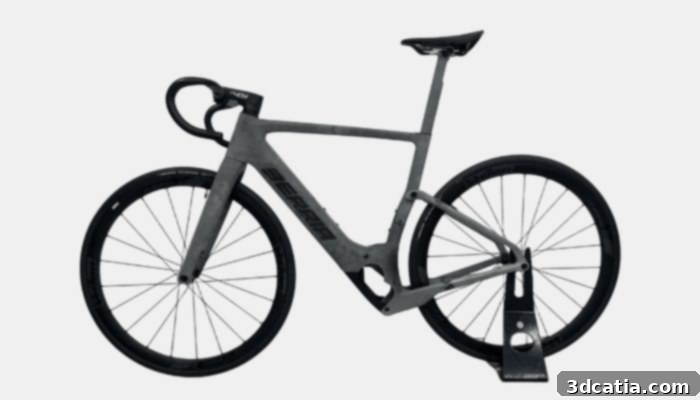
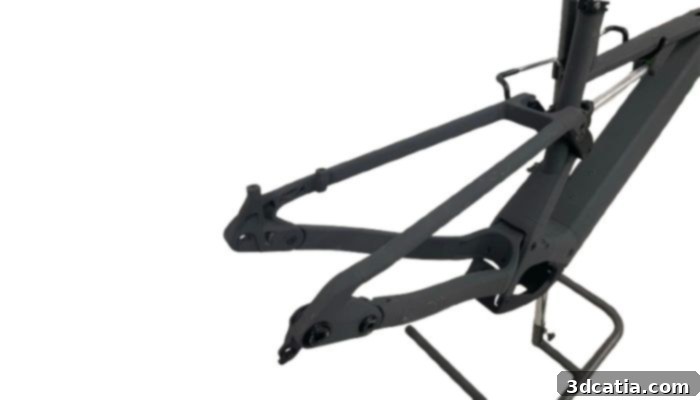
The e-bike frame made from PA12. (Credit: Mausa 3D)
Accelerated Prototyping with Multi Jet Fusion (MJF) Technology and PA12
The speed and precision with which the ‘Mistral’ prototype came to fruition are testaments to the power of modern additive manufacturing, specifically the Multi Jet Fusion (MJF) process employed by Mausa 3D. Traditional prototyping methods, often relying on time-consuming CNC machining or laborious mold creation, can extend development timelines by weeks or even months, incurring significant costs and severely limiting design iteration capabilities. In stark contrast, the expert team at Mausa 3D was able to produce a fully functional prototype of the complex e-bike frame in an astonishingly short timeframe—just 3 to 4 days. This rapid turnaround was a game-changer for Berria Bike engineers, allowing them to perform comprehensive analyses of the frame’s intricate geometry almost immediately.
They could validate component integration with real-world fitment, and crucially, make iterative design adjustments on the fly, without the typical financial burden or time delays associated with conventional methods. The prototype, fabricated from robust PA12 material, showcased an impressive precision of up to 0.1 mm. PA12 (Nylon 12) is a highly favored material in additive manufacturing due to its excellent mechanical properties, including high strength, stiffness, impact resistance, and good chemical resistance, making it ideal for functional prototypes that undergo rigorous testing. This level of accuracy is critical for high-performance bicycle components, ensuring quick and seamless assembly of all parts and confirming the structural integrity of the design under load. Moreover, one of the most significant advantages offered by 3D printing in this context was the liberation from traditional manufacturing constraints. Designers were granted full creative freedom to optimize shapes, internal lattice structures, and ergonomic elements that would be difficult or even impossible to achieve with subtractive or mold-based manufacturing. This freedom allowed for radical innovations in frame design, strategic weight reduction, and performance enhancements before committing to the final, large-scale production phase, ultimately leading to a superior and more refined product.
From Digital Design to Tangible Reality: Mausa 3D’s Comprehensive Expertise
Mausa 3D’s role in this groundbreaking project extended far beyond simply operating the 3D printer. Their comprehensive expertise was evident at every stage of the prototyping process, showcasing a full-service approach to additive manufacturing. The team meticulously handled the preparation and subdivision of the complex digital model, optimizing it for the Multi Jet Fusion printing process. This involved careful consideration of part orientation to ensure structural integrity and surface finish, strategic placement of any necessary support structures (though minimal in MJF), and techniques to minimize potential distortions or warping during the build process. Following the digital preparation, Mausa 3D executed the in-house manufacturing with unparalleled precision, leveraging their state-of-the-art facilities and a deep understanding of polymer additive manufacturing. This meticulous attention to detail during production was crucial for achieving a high-quality functional prototype.
Crucially, Mausa 3D also took responsibility for the full assembly of the prototype components, ensuring that all individual parts integrated perfectly and that the entire frame met the stringent design specifications and performance criteria laid out by Berria Bike. The culmination of this meticulous work was a fully functional e-bike prototype, demonstrating tolerances well within the intended design range – a powerful testament to the accuracy and reliability of the MJF process. This successful prototype validation paved the way for the confident production of the final ‘Mistral’ e-bike frame, which transitioned to a high-performance HM2X carbon fiber construction. Carbon fiber, known for its exceptional strength-to-weight ratio, ensures the final bike is both incredibly light and robust. The production model further boasts an advanced ICS2 internal cable routing system, ensuring a clean aesthetic, enhancing aerodynamic efficiency by reducing drag, and providing superior protection for vital components from external elements and potential damage. This sophisticated system prevents cable snagging and minimizes maintenance, reflecting the high-end nature of the ‘Mistral’ series.
The rigorous prototyping phase allowed Berria Bike to confidently move into full-scale production, bringing this innovative e-bike to market with assurance in its design and performance. The ‘Mistral’ is now available for purchase, offering a range of models priced from €4,500 to €8,000, catering to discerning cyclists seeking peak performance, cutting-edge design, and advanced technology in an electric road and gravel platform. This successful development exemplifies how a strategic partnership leveraging additive manufacturing can accelerate product launch and deliver innovative solutions to the market.
The Broader Impact: Additive Manufacturing in Cycling and Beyond
The success story of the Berria Bike ‘Mistral’ prototype is more than just a single product launch; it signifies a broader, transformative trend in the cycling industry and, indeed, in high-performance product development across various sectors. Additive manufacturing offers designers the ability to create highly complex geometries, intricate lattice structures, and optimized forms that are simply impossible or prohibitively expensive to achieve with traditional manufacturing methods. For bicycles, this translates directly to frames that can be lighter, stronger, and significantly more aerodynamic, tailored precisely to demanding performance requirements and even individual rider specifications for unparalleled customization.
The ability to rapidly iterate on designs means that manufacturers can respond to evolving market demands, emerging rider trends, and technological advancements with unprecedented agility. Furthermore, the use of industrial-grade materials like PA12, known for its exceptional strength, flexibility, and chemical resistance, ensures that prototypes are not just visual models but fully functional components capable of rigorous testing in real-world conditions. This level of confidence in the prototype allows for more informed and strategic decisions before investing substantial capital in expensive mass production tooling. As 3D printing technology continues to advance, we can expect to see even more radical innovations in bicycle design, from hyper-custom-fitted components to entirely new categories of bikes that leverage the unique capabilities of additive processes, such as integrated sensor housing or advanced suspension designs that are impossible to cast or machine. The collaboration between Berria Bike and Mausa 3D serves as a shining example for other manufacturers across sports equipment, automotive, aerospace, and consumer goods looking to gain a significant competitive edge by embracing the future of product development through advanced additive manufacturing.
What are your thoughts on the groundbreaking e-bike prototype developed by Berria Bike and Mausa 3D? We’re eager to hear your insights on how 3D printing is shaping the future of cycling and product innovation. Let us know your perspective in a comment below or connect with us and share your views on our LinkedIn or Facebook pages! To stay updated with the very latest advancements, news, and breakthroughs in the dynamic world of 3D printing, don’t forget to sign up for our free weekly Newsletter, delivering essential information straight to your inbox. You can also explore all our compelling videos, expert interviews, and in-depth analyses on our YouTube channel. For those particularly interested in more 3D printing news within the dynamic automotive and transportation sector, we invite you to visit our dedicated page HERE to discover further innovations and transformative applications.
*Cover Photo Credit: Berria Bike