
Revolutionizing Conservation: How 3D Printing is Saving New Zealand’s Endangered Native Fish
Our planet’s marine ecosystems are facing an unprecedented crisis. Overfishing, rampant pollution, extensive habitat degradation, and the escalating impacts of climate change are pushing countless marine species to the brink of extinction. This global ecological challenge means that nearly 10% of all known marine life, from magnificent whales and intelligent dolphins to ancient sea turtles and diverse fish populations, are now classified as threatened, a figure that continues to rise with alarming speed. While this is a worldwide issue, each nation contends with its own unique set of environmental hurdles. New Zealand, often celebrated for its pristine natural beauty, is grappling with a particularly acute biodiversity crisis in its freshwater systems. A staggering 76% of its 51 indigenous freshwater fish species are either threatened with extinction or at significant risk of becoming so. In response to this grave threat, the National Institute of Water and Atmospheric Research (NIWA), a Crown Research Institute established in 1992, has embraced an innovative solution: the power of 3D printing technology.
When contemplating New Zealand, many minds conjure images of majestic mountains, verdant rolling hills, and breathtaking coastlines – a truly awe-inspiring landscape. However, beneath this picturesque exterior, the country has been confronting severe environmental concerns in recent years. The preservation of its native plants, animals, and delicate ecosystems has rightfully been elevated to a national priority. Within this critical context, NIWA plays a pivotal role. Its dedicated efforts to safeguard indigenous fish species encompass a multi-faceted approach, integrating vital public education initiatives, rigorous data gathering, and comprehensive scientific research. These foundational activities are indispensable, enabling researchers to accurately identify species, understand their ecological requirements, and implement effective protection strategies. But how precisely does the cutting-edge technology of 3D printing fit into this intricate framework of conservation?
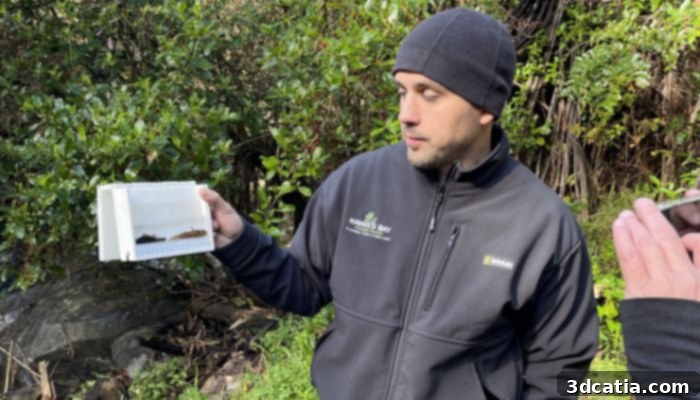
Andre Magdich (HBRC) shows the NIWA Fish & macroinvertebrate Photarium (photo credits: Cindy Baker, NIWA)
Innovating Freshwater Conservation: Harnessing 3D Printing to Protect Endangered Fish
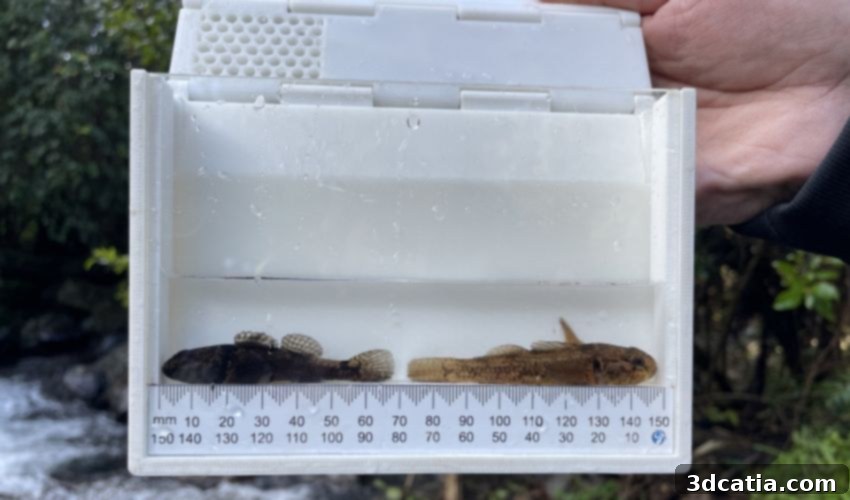
The innovative solution at the heart of NIWA’s conservation strategy centers around a deceptively simple yet incredibly vital piece of equipment: a small, rectangular plastic box known as a Photarium. While its external appearance might suggest an unassuming device, the Photarium is an indispensable tool for safely observing and studying live fish directly in their natural habitats, in the field. Its design incorporates a transparent side panel and an integrated ruler, allowing researchers to accurately measure and examine fish without the need for direct handling or removal from the water. This minimizes stress on the fish, crucial for species that are already vulnerable. Furthermore, the opaque sections of the box are designed to block excessive light, which significantly reduces stress levels for fish during short-distance transportation or observation periods. The critical challenge, however, has been the accessibility of these essential tools. Traditionally, Photariums have only been manufactured in the United States, and unfortunately, they were not routinely shipped to New Zealand, creating a significant logistical barrier for local conservation efforts.
This is precisely where the transformative capabilities of 3D printing came to the rescue, offering a localized and highly adaptable solution. Thanks to the recent acquisition of an industrial-grade 3D printer, NIWA Freshwater Ecologist Peter Williams was empowered to take the initiative, developing and producing customized Photariums right in New Zealand. The inherent flexibility and rapid prototyping capabilities of 3D printing proved invaluable. Williams was able to design and iterate on a high-quality version of the tool, meticulously adapting and modifying it for the specific requirements of sampling small native fish species. This level of customization is crucial in ecological research, where different species or environmental conditions might necessitate slightly varied equipment. For instance, the designs now include practical enhancements such as an integrated closing top lid to prevent agile fish from jumping out during observation and a mesh hatch cover, which allows for convenient topping up of the water level, maintaining optimal conditions for the fish. Peter Williams enthusiastically elaborates on the profound impact of this technology, stating, “The beauty of the 3D printer is it allows NIWA to produce Photariums on demand and to keep improving our design based on what we discover while using them in the field.” This iterative design process, driven by real-world application, ensures that the tools are continuously optimized for maximum effectiveness and minimal impact on the precious fish being studied.
The implementation of these 3D-printed Photariums has proven remarkably successful in its initial stages. A recent press release from NIWA highlights the significant advantages these tools offer. The Photariums not only significantly improve the accuracy and ease of fish identification but also facilitate the collection of vital data and the subsequent release of the fish with minimal handling. Crucially, this process eliminates the need for anesthetics, which can introduce additional stress or potential harm to delicate fish. By reducing physical manipulation and avoiding chemical interventions, the Photariums play a critical role in decreasing both stress levels and, most importantly, mortality rates in the fish being studied. This gentler approach is paramount, especially when working with endangered species, allowing researchers to observe these vulnerable fish through all stages of their development in a more natural and less intrusive manner. The resounding success of this initiative has garnered widespread attention and support across New Zealand’s conservation community. NIWA has already received over 70 orders for its innovative 3D-printed Photariums from a diverse range of organizations, including regional councils, Māori rūnanga (tribal authorities), the Department of Conservation (DOC), and various educational groups throughout the country. This strong demand underscores the urgent need for such practical and effective tools in local conservation efforts. Further details on this groundbreaking project can be found in the official NIWA press release HERE, offering a deeper dive into the technicalities and impacts of this vital work.
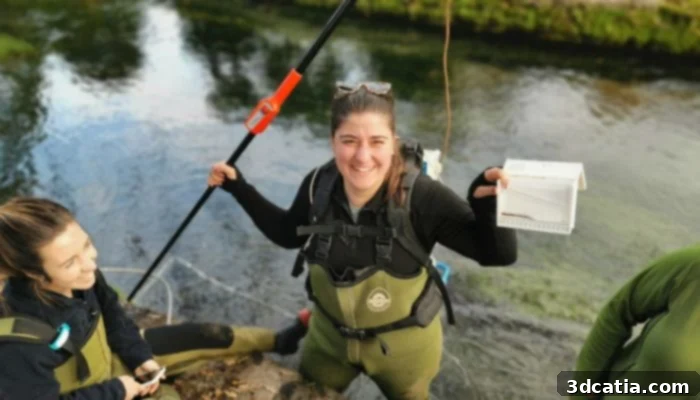
India Hamill (Marlborough District Council) holds a Lamprey & elver Photarium (photo credits: Marlborough District Council)
The application of 3D printing in conservation, exemplified by NIWA’s Photarium project, represents a powerful new frontier in environmental protection. It highlights how cutting-edge technology, when applied thoughtfully and strategically, can provide tangible solutions to complex ecological challenges. The ability to rapidly prototype, customize, and produce specialized equipment locally offers immense advantages. It reduces reliance on external suppliers, cuts down on shipping costs and delays, and most importantly, allows for the continuous improvement of tools based on direct field feedback. This agile development process ensures that conservationists have the most effective and humane instruments at their disposal for studying and protecting fragile ecosystems and their inhabitants. Beyond just New Zealand, this model holds significant promise for conservation efforts worldwide, demonstrating how local innovation can have a global impact.
The success of the 3D-printed Photarium project is a testament to NIWA’s commitment to innovative research and its proactive approach to addressing New Zealand’s unique biodiversity challenges. By empowering local researchers with the tools they need to conduct less invasive and more effective studies, NIWA is directly contributing to the long-term survival of the country’s threatened native freshwater fish. This initiative not only protects vulnerable species but also fosters a deeper understanding of their biology and ecological requirements, which is essential for developing robust conservation strategies. It serves as an inspiring example of how interdisciplinary collaboration, combining ecological expertise with advanced manufacturing techniques, can yield powerful outcomes for environmental stewardship. As the threats to global biodiversity continue to mount, such creative and adaptable solutions will be increasingly vital in our collective efforts to preserve the natural world for future generations.
What are your thoughts on the groundbreaking use of 3D printing to help save endangered fish species in New Zealand? Do you see potential for similar applications in conservation efforts around the globe? We invite you to share your insights and comments below or engage with us on our social media platforms. You can find us on LinkedIn, Facebook, and Twitter. Don’t forget to subscribe to our free weekly Newsletter here to receive the latest 3D printing news directly in your inbox! You can also explore all our informative videos on our YouTube channel.
*Cover Photo Credits: Cindy Baker, NIWA