
3D Printing in the European Automotive Industry: A Deep Dive into Innovation & Customization
The automotive industry is undergoing a profound transformation, with leading car manufacturers increasingly embracing 3D printing, also known as additive manufacturing, to redefine production processes, enhance vehicle performance, and offer unparalleled customization options. This revolutionary technology is no longer confined to niche applications but has become an integral part of the automotive value chain, seamlessly integrating with traditional manufacturing methods. From cutting-edge electric vehicles and mass-market models to bespoke luxury cars, 3D technologies are driving innovation across the board. The global automotive 3D printing market reached an impressive $4.7 billion in 2023, with a projected annual growth rate of 14.2% through 2032. This remarkable expansion is largely fueled by the surging demand for personalized vehicles and more efficient, sustainable production methods.
But how exactly is additive manufacturing being utilized by the automotive giants, and what competitive advantages does it confer? To explore these crucial questions, we’ve compiled a comprehensive overview focusing on prominent European car manufacturers. This detailed analysis highlights how these brands are leveraging 3D printing for a diverse range of applications, including the creation of finished parts, functional prototypes, advanced tooling, and intricate customization elements. Organized by country, this non-exhaustive list showcases some of the most impactful automotive 3D printing projects across Europe. We encourage you to share your insights and comments, as this dynamic landscape is constantly evolving!
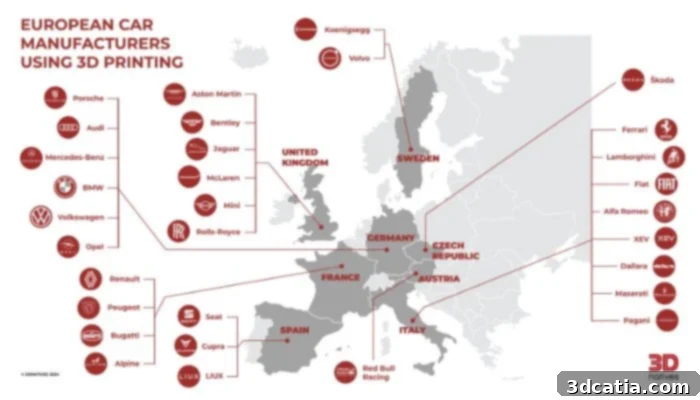
Map of European automakers using 3D printing. Click HERE to enlarge and download
Germany: Pioneers of Automotive 3D Printing Excellence
For more than a century, the German automotive industry has been synonymous with unparalleled quality, precision engineering, and groundbreaking innovation. It comes as no surprise that additive manufacturing is deeply embedded within this powerhouse sector, with iconic brands like BMW and Volkswagen having integrated 3D printing into their operations for two to three decades. Today, a broader spectrum of major automotive players, including Porsche, Audi, Mercedes-Benz, and Opel, are also harnessing the transformative benefits of additive manufacturing. Many of these companies have established their own state-of-the-art 3D printing and development centers, underscoring their commitment to this advanced technology.
This technology plays a crucial and multifaceted role across the entire production chain, from initial research and development (R&D) and rapid prototyping to the intricate assembly of modern vehicles and even the meticulous restoration of classic cars. An increasing number of automotive components, such as complex body parts, intricate transmission elements, and innovative interior features like Audi’s uniquely breathable seat, are now being manufactured using 3D printing. This allows for designs that were previously impossible with traditional methods, leading to lighter, stronger, and more functional parts.
To meet these diverse and demanding needs, German manufacturers employ a wide array of cutting-edge printing technologies and materials. For instance, in 2020, Porsche utilized laser powder bed fusion (LPBF) to produce an electric motor housing, benefiting significantly from solutions offered by SLM Solutions. This collaboration allowed Porsche to optimize the part’s topology, resulting in a considerable reduction in weight without compromising structural integrity. BMW, a long-time pioneer in additive manufacturing, deploys a comprehensive range of technologies throughout its production ecosystem, including Selective Laser Sintering (SLS), large-scale 3D printing, and more recently, Wire Arc Additive Manufacturing (WAAM). In 2023 alone, BMW’s Oberschleißheim center successfully produced an astounding 300,000 parts using additive manufacturing, highlighting the scale of their adoption.
Volkswagen, another German automotive titan, focuses primarily on metal 3D printing at its advanced Wolfsburg site, pushing the boundaries of material science and component performance. Concurrently, at its Emden campus, Volkswagen introduces its trainees to the practical benefits of Fused Deposition Modeling (FDM) technology, nurturing the next generation of additive manufacturing experts. Mercedes-Benz, renowned for its luxury and commercial vehicles, primarily leverages 3D printing for maintenance and logistical efficiency. They have strategically established mobile 3D printing centers, integrated with digital twin technology, to produce spare parts locally for their extensive fleet of buses (under Daimler Truck & Buses). This innovative approach significantly reduces lead times and enhances operational resilience across their global service network.

Photo Credits: BMW
France: Blending Performance and Personalization with AM
In France, a host of prestigious manufacturers, including Renault, Alpine, Peugeot, and Bugatti, have seamlessly integrated additive manufacturing into their daily operations. The applications of 3D printing vary significantly across these groups, reflecting each brand’s unique market positioning and strategic objectives. Bugatti, for instance, a name synonymous with hypercars and extreme performance, extensively relies on 3D printing to elevate the capabilities of its vehicles. Their focus is on creating increasingly lightweight and structurally optimized components, pushing the boundaries of automotive engineering. A recent example of this innovation is Bugatti’s pioneering chassis design, developed using metal 3D printing, which achieved a remarkable 45% reduction in suspension weight. Furthermore, Bugatti famously utilized laser powder bed fusion to manufacture the world’s largest 3D-printed brake caliper from titanium, a testament to the technology’s capability in producing high-performance, critical components.
Renault, a major player in the global automotive market, has demonstrated a strong interest in internalizing these advanced technologies. The company has established a sophisticated printing center in Flins, which consolidates various 3D printing technologies, including FDM and Multi Jet Fusion (MJF), alongside advanced post-processing solutions. This integrated facility enables Renault to produce both functional prototypes for rapid development and high-quality finished parts for series production. Examples include customizable interior elements for certain car models, as well as the interior mirror cover for the new Alpine A110 R, a highly anticipated limited series of just 900 units. In an exclusive interview, a Renault spokesperson emphasized their strategic shift: “In 2020, the group began to seriously evaluate the feasibility and benefits of 3D printing parts for its production vehicles. This comprehensive reflection spanned our entire value chain and involved all our brands, as well as numerous key suppliers. Today, we are actively restructuring the company to fully embrace 3D printing for the production of vehicle parts, marking a significant commitment to this technology.”
Peugeot, another cornerstone of the French automotive landscape, also utilizes additive manufacturing for the design and production of specific vehicle parts. While the full extent of their in-house capabilities is not publicly detailed, it is known that the automaker collaborates with various specialized service providers for complex projects and has likely invested in several office-level machines to facilitate agile rapid prototyping within its design and engineering departments. This hybrid approach allows Peugeot to benefit from 3D printing’s advantages without necessarily building massive internal infrastructure for every application.
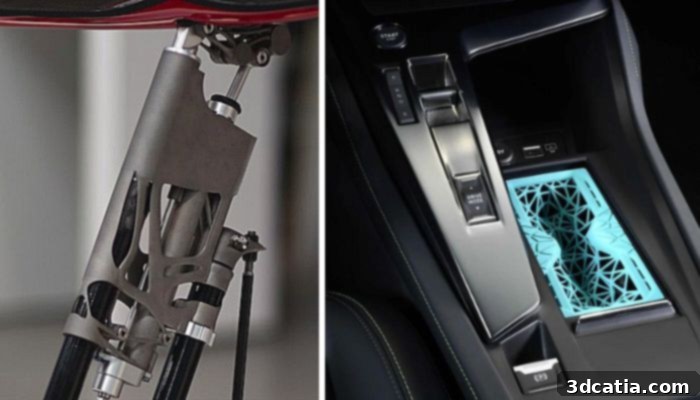
On the left, a 3D-printed spoiler support from Bugatti; on the right, a custom-made part for the interior of the Peugeot 308.
Spain: Accelerating Innovation in Automotive Component Manufacturing
Just a few years ago, 3D printing was relatively underdeveloped within Spain’s automotive manufacturing sector. However, the landscape has dramatically shifted, with the Spanish automotive industry now at the forefront of adopting additive technologies for component manufacturing. According to a recent report by Sernauto, Spain holds the impressive position of being the fourth-largest producer of automotive components in Europe, boasting over 1,000 companies actively engaged in the sector. Leading brands such as SEAT, CUPRA, and LIUX are now deeply integrating 3D printing into their core production and development processes.
SEAT and CUPRA, both integral members of the vast Volkswagen Group, have established advanced additive manufacturing centers. These facilities leverage a diverse portfolio of 3D technologies, including Multi Jet Fusion (MJF), Selective Laser Sintering (SLS), Fused Deposition Modeling (FDM), and PolyJet. SEAT specifically highlights that approximately 80% of the parts produced at these centers are sophisticated prototypes, essential for rapid iteration and design validation, while the remaining output comprises functional components and specialized tooling. This strategic allocation demonstrates a balanced approach, utilizing 3D printing for both upstream development and downstream production support.
On the other hand, LIUX represents a new wave of Spanish innovation, a brand born with the ambitious vision of transforming the electric car industry through pioneering technologies. One of its most remarkable developments is the LIUX Animal, a groundbreaking 3D-printed electric vehicle primarily constructed from recycled or plant-based materials. By strategically employing additive manufacturing, LIUX has achieved significant environmental and operational efficiencies. The company has successfully reduced energy consumption by an impressive 70% during manufacturing, significantly lightened the vehicle’s body, accelerated production times, and substantially cut CO2 emissions. This exemplifies how 3D printing can be a cornerstone for sustainable and agile manufacturing in the burgeoning electric vehicle market.
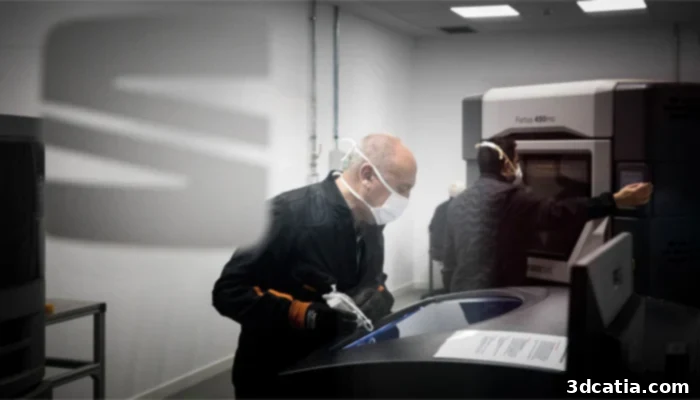
Photo Credits: SEAT
The United Kingdom: Crafting Luxury and Performance with Additive Manufacturing
When one envisions car manufacturing in the United Kingdom, the immediate images that come to mind are often those of exquisite premium vehicles, timeless classics, and leading-edge automotive engineering from world-renowned marques. It is therefore fitting that these prestigious manufacturers, including Bentley, Jaguar, Rolls-Royce, McLaren, MINI, and Aston Martin, are increasingly adopting and integrating advanced additive manufacturing technologies into their sophisticated production processes.
One of the most prominent applications of 3D printing among these British brands perfectly aligns with the perception of the UK automotive industry as a global hub for luxury and bespoke craftsmanship: the creation of highly customizable and unique sports cars. Aston Martin, a quintessential luxury brand, has been an early and enthusiastic adopter of 3D printing. Their journey began in 2021 with polymer extrusion and has evolved to incorporate carbon fiber FDM and aluminum metal 3D printing. These technologies were instrumental in the rapid development and optimization of components for the new DBR22, demonstrating how additive manufacturing accelerates the design cycle for high-performance vehicles. Rolls-Royce, while perhaps best known for its pioneering use of metal additive manufacturing in aerospace applications, has also strategically integrated both metal and polymer 3D printing into its ultra-luxury automobiles. A recent, stunning example is the specially commissioned La Rose Noire, which featured a meticulously 3D-printed lower intake manifold, showcasing the potential for intricate design and superior functionality in bespoke vehicles. Intriguingly, this pursuit of personalization wasn’t exclusive to the ultra-wealthy, as MINI previously offered a 3D printing customization service for its cars, albeit now discontinued.
Beyond personalization, British car companies are leveraging additive manufacturing for a broad spectrum of applications. Bentley, for instance, boasts significant in-house 3D printing capabilities at its iconic Crewe factory. In 2021, the facility successfully produced 15,000 components, leading to an expansion of its additive manufacturing resources in 2022. These capabilities are utilized for crucial tasks such as rapid prototyping, intricate personalization features, and efficient low-volume manufacturing of specialized parts. Similarly, Jaguar was an early adopter, establishing an advanced additive manufacturing center in 2020 dedicated to its vehicles. This facility was instrumental in projects like the Jaguar XE SV Project 8, which stands out as one of the first production vehicles to feature end-use 3D printed parts, signifying a major leap from prototyping to direct application.
Last but certainly not least, McLaren has extensively adopted additive manufacturing for its elite racing division, notably through partnerships with industry leaders like Stratasys and, more recently, Divergent Technologies. For McLaren, additive manufacturing is set to form the core of the next generation of supercars. The primary drivers behind this adoption are the compelling possibilities of achieving significant weight reduction and dramatically improved dynamic performance – critical factors in the competitive world of high-performance and motorsport engineering. This wide range of applications clearly illustrates the diverse and impactful ways British car manufacturers are utilizing additive manufacturing across the automotive sector, from luxury customization to championship-winning race cars.

A McLaren racecar made with the help of Stratasys’ FDM and PolyJet technologies (photo credits: McLaren)
Italy: The Motor Valley’s Embrace of 3D Printed Excellence
Italy, a nation renowned for its passionate design and high-performance vehicles, produced an impressive 540,000 cars in 2023, according to a recent report by the Rome Business School. The report further illuminates the unique structure of the Italian automotive sector, characterized by a high degree of fragmentation, with numerous micro-businesses operating alongside a few dominant large companies. Crucially, it is these larger enterprises that concentrate the lion’s share of investments in new technologies, advanced materials, and innovative products, making them prime movers in the adoption of 3D printing.
Indeed, virtually all major Italian automakers – including the legendary Ferrari, Maserati, Lamborghini, Pagani, Dallara, as well as mainstream brands like Fiat and Alfa Romeo – have either adopted or extensively experimented with 3D printing. These companies are now making significant investments in this technology for the creation of both rapid prototypes and critical final parts. Over time, additive manufacturing has proven instrumental in enhancing the production efficiency and, more importantly, the performance of their iconic vehicles. Furthermore, the companies nestled within Italy’s famed “Motor Valley” are synonymous with luxury and customization, with the latter being one of the most compelling advantages offered by additive technologies. 3D printing allows for intricate, one-off designs and tailored components that cater to the discerning tastes of their clientele.
Ferrari, a titan of motorsport and luxury, has extensively explored and implemented metal 3D printing. By utilizing Direct Metal Laser Sintering (DMLS) technology, Ferrari manufactures higher-performance metal components and aerodynamically optimized elements for its road cars and, critically, for its Formula 1 racing machines. This enables the creation of lighter, stronger, and more complex geometries that provide a competitive edge. Another striking example is the Maserati MCXtrema, a track-only hypercar whose intricate body was meticulously designed and partially produced using 3D printing techniques. Maserati also employs PolyJet technology to offer advanced customization options for the seats of its vehicles, ensuring ultimate comfort and personalized aesthetics for its customers.
Lamborghini made a significant statement a few years ago with the Sián, a hybrid supercar that extensively incorporates additive manufacturing into its structure. This strategic choice was driven not only by the technology’s inherent ability to produce components in small, specialized batches but, more importantly, by the vast possibilities it opened up for interior and exterior customization. Elements such as complex air intakes, durable connectors, lightweight brackets, and intricately designed housings are all manufactured in 3D using SLS polymer technology. The vibrant Italian automotive scene also includes innovative newcomers like XEV, which developed the Yoyo, a compact electric car featuring a revolutionary 3D-printed body. The Yoyo exemplifies how additive manufacturing can facilitate more dynamic, sustainable, and cost-effective urban mobility solutions.
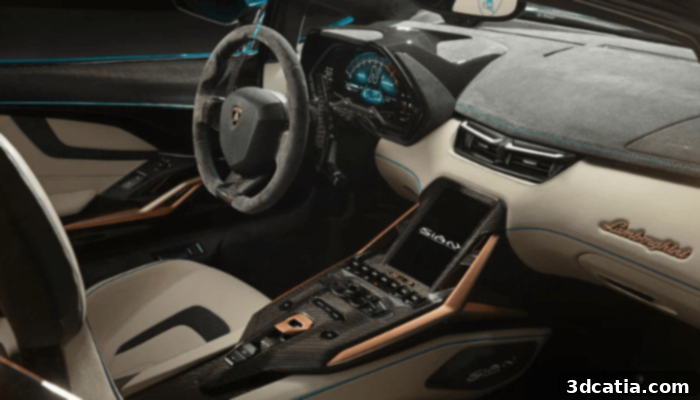
The Sián incorporates 3D-printed parts (photo credits: Lamborghini)
Sweden: Pioneering Sustainability and Performance through AM
The Swedish automotive industry, home to globally recognized brands such as Volvo and Koenigsegg, is increasingly integrating advanced 3D printing technology into its diverse manufacturing processes. Volvo, a major player in the global market, particularly known for its commitment to safety and innovation, has adopted the innovative cold spray technique developed by Titomic. This cutting-edge technology allows for the deposition of thick layers of special metals onto surfaces without the need for melting, preserving material properties and minimizing distortion. Volvo Trucks, a critical division of the company, specifically utilizes cold spray for the maintenance, repair, and overhaul (MRO) of its heavy-duty vehicle engines. This application enhances durability, extends the lifespan of components, and offers a more sustainable approach to industrial repair.
Koenigsegg, the acclaimed manufacturer of ultra-exclusive hypercars, exemplifies the high-performance application of 3D printing, especially in the production of its sophisticated hybrid vehicles. The company employs both FDM and resin printers to produce thousands of intricate parts, pushing the boundaries of what is possible in extreme automotive engineering. Christian von Koenigsegg, the visionary founder and CEO, has revealed that they even produce their own proprietary resin formulations tailored for these specific processes. He states: “We make housings for electronic controllers, precision nozzles for sprayers, aerodynamic fins, and various other high-temperature parts.” Furthermore, Koenigsegg leverages 3DPrinterOS software to streamline and enhance its production workflow, utilizing 3D printing extensively for rapid prototyping and rigorous component testing. This integration significantly improves production efficiency, reduces development cycles, and ensures cost-effectiveness while maintaining the highest standards of performance and quality.
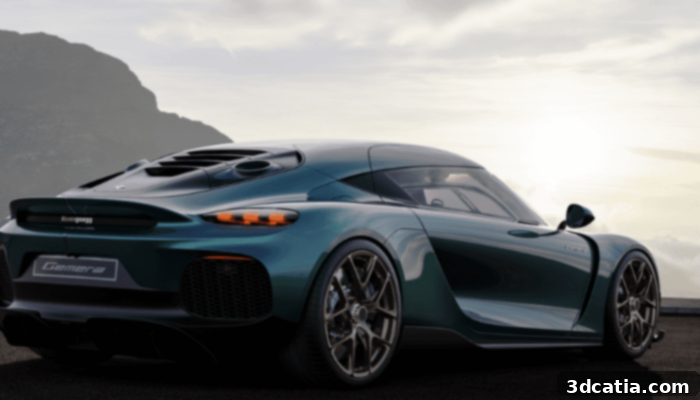
Photo Credits: Koenigsegg
The Czech Republic: ŠKODA AUTO’s In-House Additive Revolution
ŠKODA AUTO, a highly influential member of the Volkswagen Group and the largest employer in the Czech Republic, has been at the forefront of leveraging 3D printing for several years. The technology plays a pivotal role in accelerating the development of new models, facilitating the creation of accurate prototypes, streamlining the manufacturing of spare parts, and rigorously testing materials for eventual mass production. At the main plant in Mladá Boleslav, the production and logistics department operates an impressive 3D printing farm equipped with approximately fifty printers, including popular Prusa models. This extensive facility empowers ŠKODA to produce complex parts quickly and with exceptional accuracy, directly supporting their ambitious production schedules and design iterations.
Thanks to the demonstrable success of this internal initiative, the application of 3D plastic printing has been strategically expanded to other ŠKODA manufacturing sites. This widespread adoption enables ŠKODA technicians across various locations to develop and precisely fit prototypes and vital spare parts entirely in-house. This internal capability significantly reduces the company’s dependence on external suppliers for specialized components, offering greater control over quality, lead times, and intellectual property. The tangible results are clear and impactful: production processes are faster, significantly more efficient, and ultimately less costly. Michael Oeljeklaus, Head of Production and Logistics at ŠKODA AUTO, elaborates on this strategic advantage: “We utilize 3D printing to create components and tools with greater speed, enhanced efficiency, and at a lower cost, thereby fully capitalizing on the transformative potential of Industry 4.0 technologies.” This commitment positions ŠKODA AUTO as a leader in digital manufacturing within the broader automotive landscape.
Austria: Red Bull Racing’s Formula 1 Advantage with AM
Red Bull Racing, a formidable force in the high-stakes world of Formula 1, is consistently pushing the boundaries of innovation by increasingly integrating additive manufacturing to achieve critical performance advantages. Their primary objectives are to drastically reduce car weight and optimize aerodynamic performance – factors that directly translate into milliseconds on the racetrack. For instance, in a longstanding partnership with Hexagon Manufacturing Intelligence, which has collaborated with the team for over 18 years, 3D printing is instrumental in reducing manufacturing errors by an impressive 50%. This precision is paramount in a sport where even microscopic imperfections can impact performance.
Beyond physical production, Red Bull Racing extensively utilizes digital twins and sophisticated simulations to rigorously test virtual car designs long before producing any physical prototypes. This iterative design process begins with advanced CAD software, while the actual production of components and prototypes often relies on Stereolithography (SLA) technology. This synergy enables the rapid creation of highly accurate prototypes and functional parts, significantly accelerating the development cycle and bolstering the overall reliability of their race cars. Furthermore, 3D printing is ingeniously employed to manufacture specialized drones used for assessing performance on the racetrack. These drones provide invaluable data and insights, giving the team a strategic advantage by facilitating the rapid integration of design innovations. The application of artificial intelligence also plays a crucial role, helping to optimize the design process further and adapt vehicle components to perform optimally across diverse climates and track conditions globally, cementing Red Bull Racing’s position at the cutting edge of automotive and engineering technology.
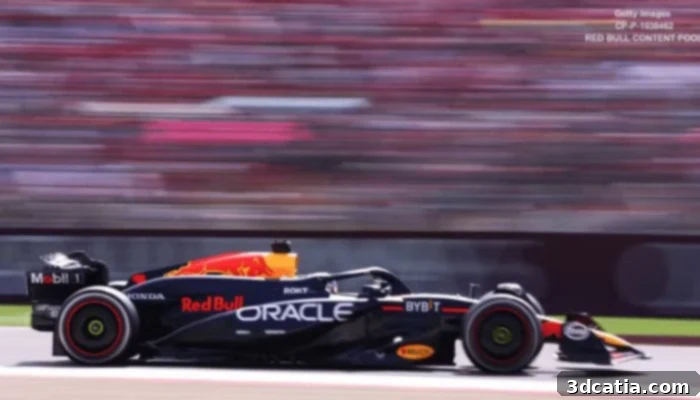
Photo credits: Red Bull Racing
The extensive adoption of 3D printing by European car manufacturers underscores a profound shift in the automotive industry. From Germany’s foundational integration to Italy’s luxury customization, France’s balanced approach, Spain’s sustainable innovations, the UK’s performance-driven applications, Sweden’s MRO solutions, the Czech Republic’s in-house production, and Austria’s Formula 1 dominance, additive manufacturing is proving to be a versatile and indispensable technology. Its ability to enable rapid prototyping, create lightweight and complex functional parts, facilitate unparalleled customization, and optimize supply chains is driving the future of automotive design and production towards greater efficiency, sustainability, and innovation.
What are your thoughts on how these European car manufacturers are utilizing 3D printing to redefine the automotive landscape? Let us know in a comment below or join the conversation on our LinkedIn, Facebook, and Twitter pages! Don’t forget to sign up for our free weekly newsletter here for the latest 3D printing news straight to your inbox! You can also find all our videos on our YouTube channel, offering deeper dives into these exciting technologies.
*Cover Photo Credits: Sernauto