
3D Printed Homes: ICON’s Austin Project Redefines Modern Living and Sustainable Construction
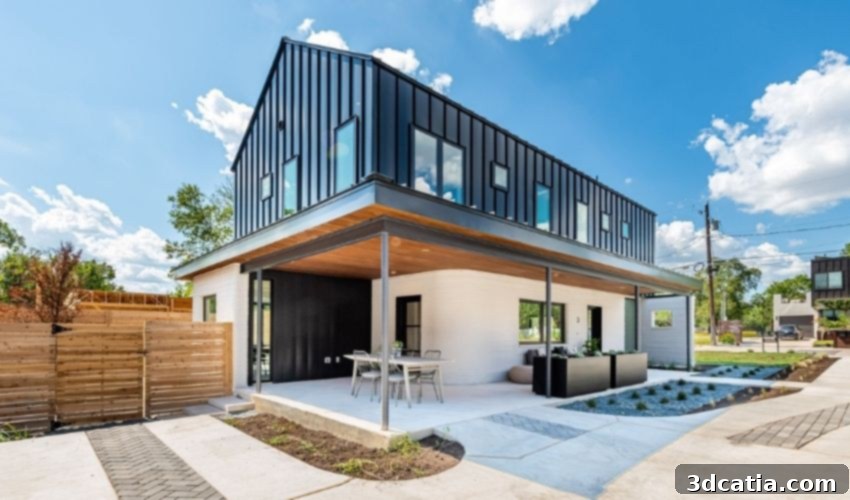
The landscape of residential construction is undergoing a revolutionary transformation, largely propelled by advancements in additive manufacturing. Across the globe, 3D printed homes are emerging at an unprecedented pace, promising a future of faster, more resilient, and potentially more sustainable housing solutions. Leading this innovative charge is the Texas-based startup ICON, a pioneer that has consistently pushed the boundaries of what’s possible with large-scale 3D printing technology. Their latest groundbreaking endeavor, the East 17th Street Residences in Austin, Texas, stands as a testament to this progress, featuring the United States’ “first 3D-printed homes for sale and ready for move-in.” This collaborative project between ICON and real estate developer 3strands has already captured significant attention, with one of the four available homes having been swiftly purchased, signaling strong market interest in this novel housing concept.
The foundation of these remarkable homes lies in ICON’s proprietary technology, specifically their state-of-the-art Vulcan construction system. The entire ground floor of each residence is fabricated using this advanced additive manufacturing process, employing a unique material known as Lavacrete. This Portland-cement-based composite material boasts superior strength and durability when compared to conventional building materials. ICON emphasizes that this 3D printing technology delivers homes that are not only more resilient but are specifically engineered to endure extreme weather conditions and natural disasters, including fires, floods, and severe winds. Such robust construction, completed within a matter of weeks, offers a significant advantage in areas prone to environmental challenges. As the company proudly stated, “3D-printing technology provides safer, more resilient homes that are designed to withstand fire, flood, wind and other natural disasters better than conventionally built homes,” setting a new benchmark for structural integrity and occupant safety.
The Evolution of 3D Printed Home Construction: From Vision to Reality
ICON’s pioneering spirit isn’t limited to residential developments. The startup’s versatile 3D printing technology is also famously being utilized to construct a simulated Mars surface habitat, a project that underscores the expansive potential of their innovations. While ICON initially gained recognition for its ambitious goal of developing truly affordable housing solutions, the current East 17th Street Residences project in Austin presents homes in a higher price bracket, typically ranging around $750,000. This price point, while a significant investment for many, reflects the cutting-edge technology, premium features, and desirable location of these unique properties. Situated within a highly walkable and bikeable community, the development is conveniently located just three miles from Austin’s vibrant downtown core, offering residents an ideal blend of urban accessibility and innovative living.
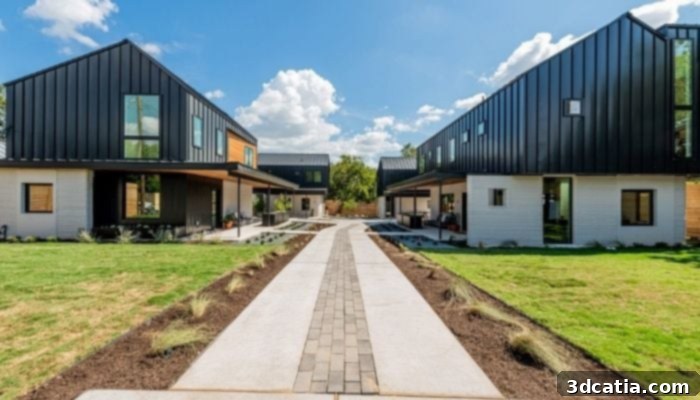
The Austin development comprises four distinct 3D-printed homes: two inviting 2-bedroom residences and two spacious 4-bedroom residences. The market response has been enthusiastic, with both of the 2-bedroom properties already under contract, demonstrating strong demand for these innovative living spaces. The two 4-bedroom houses, offering more expansive layouts, remain available for prospective buyers looking for a blend of advanced technology and generous living areas. Each home is thoughtfully designed to maximize comfort and modern living, featuring private yards, convenient covered parking spaces, abundant large windows that invite natural light, and high-performance HVAC systems ensuring optimal climate control and energy efficiency. The construction process itself is remarkably efficient; the ground-floor walls of each house typically required only five to seven days to print using ICON’s Vulcan construction system and the distinctive Lavacrete material, which creates aesthetically pleasing striated surface layers.
Innovative Design Meets Resilient Architecture
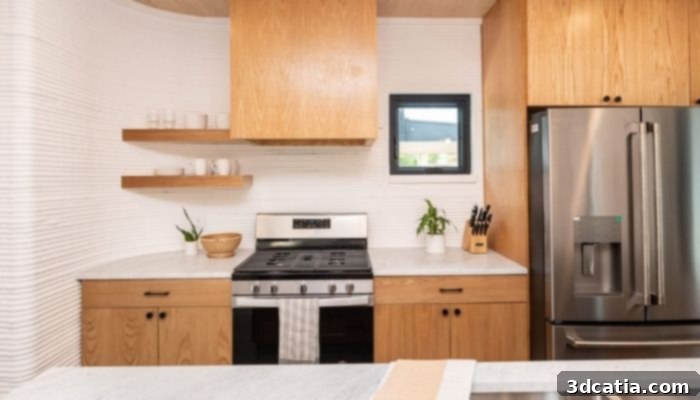
Beyond the technological marvel of their construction, these 3D printed homes also stand out for their thoughtful interior design. Recognizing the importance of aesthetics, ICON enlisted the talent of Austin-based interior designer Claire Zinnecker to craft interiors that complement the innovative exterior. Zinnecker’s design philosophy drew direct inspiration from the homes’ natural structural materials – wood, metal, and concrete. This informed her selection of a simplified, harmonious color palette, predominantly featuring shades of green, white, and terracotta. Fixtures and finishes were meticulously chosen to resonate with and play off these natural materials, creating a cohesive and inviting atmosphere within each residence. The blend of high-tech construction with organic design elements results in homes that are not only durable and efficient but also possess a unique and appealing aesthetic. This careful consideration for both form and function ensures that these 3D printed homes offer a premium living experience.
The pioneering nature of ICON’s work in Austin transcends mere construction; it represents a significant step towards a future where sustainable and resilient housing is accessible and commonplace. While the initial cost of these homes might seem prohibitive compared to the concept of “affordable housing” that 3D printing is often associated with, it’s crucial to understand the early stages of any revolutionary technology. The current pricing reflects the cutting-edge research, development, and specialized materials involved, as well as the premium features and desirable location. As 3D printing technology matures and scales, economies of scale are expected to drive down production costs, eventually making these advanced, durable homes more widely accessible. ICON’s commitment to pushing technological boundaries promises a future where rapid, cost-effective, and environmentally friendly construction becomes the norm, addressing global housing needs with unprecedented efficiency.
The Broader Impact and Future Outlook for 3D Printed Housing
The East 17th Street Residences project is more than just a housing development; it’s a living laboratory demonstrating the vast potential of additive manufacturing in the built environment. ICON’s success here provides tangible evidence that 3D printing can create homes that are not only structurally sound and aesthetically pleasing but also offer enhanced protection against environmental hazards. This resilience is particularly critical in an era of increasing climate volatility, where traditional building methods may fall short in providing long-term security. The speed of construction – transforming raw materials into sturdy walls in days – also opens up incredible possibilities for rapid deployment in disaster-stricken areas or for quickly scaling up housing in rapidly growing urban centers. Furthermore, the precise, automated nature of 3D printing often leads to less material waste compared to conventional construction, aligning with broader goals of sustainability and environmental responsibility.
Looking ahead, ICON’s innovative approach signals a paradigm shift for the entire construction industry. Their work extends beyond these homes in Austin, encompassing ambitious projects like creating structures for lunar or Martian habitats. This broader vision underscores the versatility and transformative power of 3D printing, proving its applicability across diverse and challenging environments. As the technology continues to evolve, we can anticipate further refinements in materials, design capabilities, and construction speed. The integration of artificial intelligence and robotics will likely streamline the process even further, leading to smarter, more autonomous construction sites. While challenges remain, such as navigating evolving building codes and addressing workforce training for new technologies, the trajectory set by companies like ICON suggests a future where 3D printed homes become a mainstream, desirable, and ultimately accessible option for millions worldwide. This shift promises to redefine our understanding of homeownership, blending cutting-edge innovation with fundamental human needs.
Connect with the Future of Construction
What are your thoughts on these innovative 3D printed homes by ICON and the future of additive manufacturing in construction? We invite you to share your insights and comments below, or join the conversation on our Facebook and Twitter pages. To stay informed about all the latest developments and breakthroughs in the exciting world of 3D printing, don’t forget to sign up for our free weekly newsletter, delivering essential industry news straight to your inbox!