
The Future of Food: Forma Foods Pioneers 3D Printed Plant-Based Meat for a Sustainable Tomorrow
The landscape of food innovation is rapidly evolving, with a growing emphasis on sustainability, nutrition, and ethical consumption. Among the most exciting advancements is the emergence of 3D-printed meat, a concept already explored by groundbreaking companies like Redefine Meat and Steakholder Foods, which have successfully brought their novel creations to market. Today, our focus turns to a particularly innovative start-up making waves in this sector: Forma Foods. This pioneering company is leveraging the power of 3D printing to craft high-quality, plant-based alternatives to traditional meat, addressing multiple pressing global challenges simultaneously. Their ambitious goal is to provide accessible, nutritious protein options, even for remote communities, while confronting the significant environmental and ethical issues associated with conventional factory farming practices. Forma Foods’ approach represents a confluence of advanced technology, culinary artistry, and a deep commitment to planetary well-being, paving the way for a more sustainable and equitable food system.
At the heart of Forma Foods’ revolutionary process are its visionary co-founders, Grissel Trujillo de Santiago and Mario Moises Alvarez. Both are distinguished experts in the intricate field of tissue engineering, a discipline that traditionally focuses on creating biological tissues for medical applications. Their profound understanding of cellular and structural organization has been ingeniously redirected to the realm of food science. They have developed a proprietary technique aptly named “chaotic printing.” This innovative method is a game-changer, enabling the precise creation of complex microstructures that meticulously replicate the hierarchical organization found within animal tissues. Unlike simpler extrusion methods that often yield uniform, less engaging textures, chaotic printing allows for an intricate and irregular arrangement of plant-based ingredients, mimicking the nuanced fibrous structure of muscle. Thanks to this sophisticated approach, Forma Foods’ plant-based products achieve a remarkable fidelity in texture, taste, and appearance, surprisingly close to that of traditional animal meat. This breakthrough not only satisfies the palate but also addresses the psychological and experiential aspects that consumers often miss when transitioning to plant-based diets.
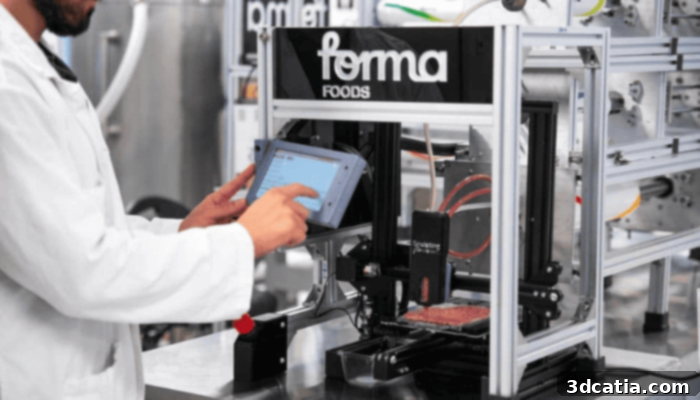
Forma Foods has developed its own 3D printing technology to make its plant-based meat
Reinventing Mexican Cuisine: 3D Printing Authentic Plant-Based Dishes
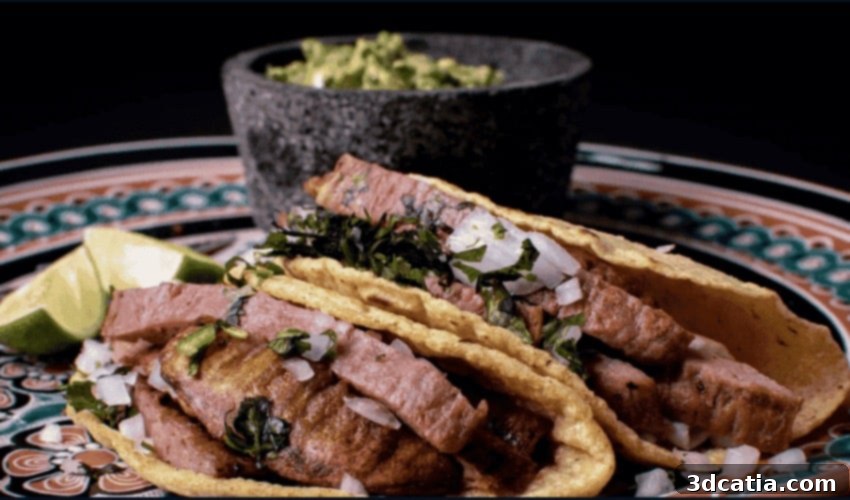
Forma Foods isn’t merely creating generic meat alternatives; they are on an exciting mission to redefine and reinvent classic Mexican dishes with a plant-based twist. Imagine savoring the rich, smoky flavors of Arrachera or the perfectly seasoned zest of carne al pastor, but in a version entirely derived from plants. This is precisely what Forma Foods aims to achieve, bringing beloved culinary traditions into the sustainable future. Their secret lies in a meticulously crafted combination of ingredients, each selected for its specific functional properties in mimicking animal tissue. Pea protein forms the foundational element, skillfully simulating the fibrous structure of muscle, providing that essential chewiness and bite. Prebiotic fiber is incorporated to replicate the elasticity and texture of connective tissue, contributing to the overall mouthfeel. Finally, coconut oil is strategically used to reproduce the succulent juiciness and melt-in-your-mouth texture of animal fat, ensuring a rich and satisfying culinary experience. This intelligent blend of plant-based components, precisely assembled through 3D printing, allows Forma Foods to create alternatives that resonate deeply with traditional culinary expectations.
From the outset, the founders of Forma Foods recognized the significant financial and logistical hurdles associated with methods that rely on animal cells. While cell-based meat offers its own unique promise, its current prohibitive costs and scalability challenges make it less immediately accessible for widespread application. Consequently, Grissel Trujillo de Santiago and Mario Moises Alvarez made a strategic decision to focus their profound expertise on plant-based alternatives, believing this path offered a more viable and scalable route to impact the global food system. Their commitment to innovation extends beyond ingredient formulation; they also meticulously designed and built their own custom 3D printers. This decision was pivotal, allowing them to optimize every aspect of their product manufacturing process and continually refine their “chaotic printing” technology to achieve unprecedented precision and realism. As Grissel Trujillo de Santiago eloquently explains, “Our 3D printers faithfully recreate muscle fibers, offering a texture strikingly similar to that of meat. By precisely mastering the microstructure, we manage to reproduce an overall structure that is surprisingly close to that of animal muscle.” This bespoke hardware ensures that the intricate details of texture and mouthfeel, crucial for consumer acceptance, are consistently achieved.
This visionary company has adapted the transformative power of 3D printing to convert carefully formulated vegetable mixtures into convincing and delicious meat substitutes. This technological breakthrough by Forma Foods is not an isolated effort; it is deeply embedded within a broader, ambitious Mexican technology initiative. This national drive seeks to position Mexico at the forefront of innovative solutions to tackle urgent global challenges, particularly those related to food security, environmental sustainability, and the ever-growing scarcity of natural resources. By developing advanced food technology, Forma Foods is contributing to a national strategy that aims to create a more resilient and sustainable future. Grissel Trujillo de Santiago articulates this overarching vision with passion: “Ultimately, we want to push the boundaries of what’s possible with innovative food technology.” This statement underscores not just their immediate product goals but their long-term commitment to fundamentally rethinking how we produce, distribute, and consume food on a global scale, aiming for a paradigm shift in our relationship with what we eat.
Expanding Palates: Forma Foods Targets Diverse Consumers for a Healthier Planet
While Forma Foods’ innovative plant-based products naturally appeal to vegans, their target audience extends far beyond this demographic, encompassing a much broader spectrum of consumers. The company recognizes the accelerating global trend of flexitarianism – individuals who are actively seeking to reduce their meat consumption without necessarily eliminating it entirely. This growing segment is motivated by a diverse array of factors, including personal health concerns, ethical considerations regarding animal welfare, and a heightened awareness of the environmental impact of animal agriculture. For these consumers, Forma Foods offers a compelling solution: a delicious, satisfying alternative that allows them to enjoy familiar flavors and textures while aligning with their evolving values and dietary goals. As the company continues its impressive growth trajectory, its pioneering work is rapidly attracting the attention of influential figures within the culinary world. Notably, Michelin-starred chef Rodrigo Rivera Rio, renowned for his exquisite palate and innovative approach to fine dining, has become a vocal admirer. His interest is a powerful validation of the quality and culinary potential of Forma Foods’ offerings, moving them from niche product to a celebrated ingredient in high-end cuisine. Chef Rio was so impressed that he even requested a bespoke version of their product, specifically incorporating beet to enhance flavor and color, demonstrating the versatility and customizability inherent in their 3D printing technology.
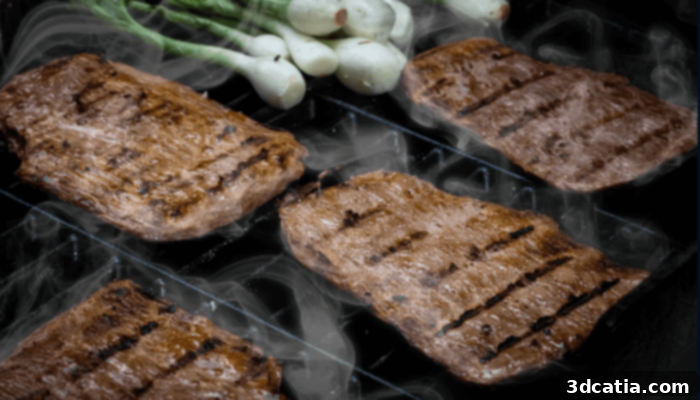
The company hopes to recreate Mexican cuisine with these plant-based offerings
The impact of Forma Foods’ advancements resonates far beyond the plate. Their work addresses critical global issues, from mitigating climate change by reducing greenhouse gas emissions associated with livestock farming to conserving vital natural resources like land and water. Factory farming is a significant contributor to environmental degradation, and by offering a delicious, scalable alternative, Forma Foods provides a tangible pathway towards a more sustainable food system. Moreover, the accessibility goal – to offer high-quality proteins even in remote areas – speaks to a broader vision of food equity and security. In regions where access to protein can be challenging due to logistical or economic constraints, plant-based 3D printed alternatives could offer a stable and nutritious food source, independent of traditional agricultural limitations. The precision offered by 3D printing also allows for nutritional customization, potentially creating foods tailored to specific dietary needs or fortifying them with essential vitamins and minerals, opening up new possibilities for addressing malnutrition.
In a world increasingly conscious of its ecological footprint and the ethical implications of its food choices, Forma Foods stands out as a beacon of innovation. Their “chaotic printing” technology, combined with a deep understanding of culinary tradition and nutritional science, positions them at the forefront of the plant-based revolution. By not only mimicking the sensory experience of meat but also by doing so in a way that is environmentally responsible, economically viable, and culturally relevant, Forma Foods is not just producing food; they are crafting the future of dining. Their success is a testament to the power of cross-disciplinary collaboration, bringing together tissue engineering, mechanical design, and gastronomy to solve some of humanity’s most pressing challenges. As they continue to expand their product line and reach, Forma Foods exemplifies how advanced manufacturing techniques like 3D printing can be harnessed to create a healthier planet and more delicious, accessible food for everyone. The journey of Forma Foods is a compelling narrative of how technology, when guided by a clear vision for sustainability and impact, can truly transform our world, one 3D-printed plant-based steak at a time.
What do you think of Forma Foods’ 3D-printed plant-based meat? We’d love to hear your thoughts! Let us know in a comment below or on our LinkedIn, Facebook, and Twitter pages! Don’t forget to sign up for our free weekly newsletter here, for the latest 3D printing news straight to your inbox! You can also find all our videos on our YouTube channel.
*All Photo Credits: Forma Foods