
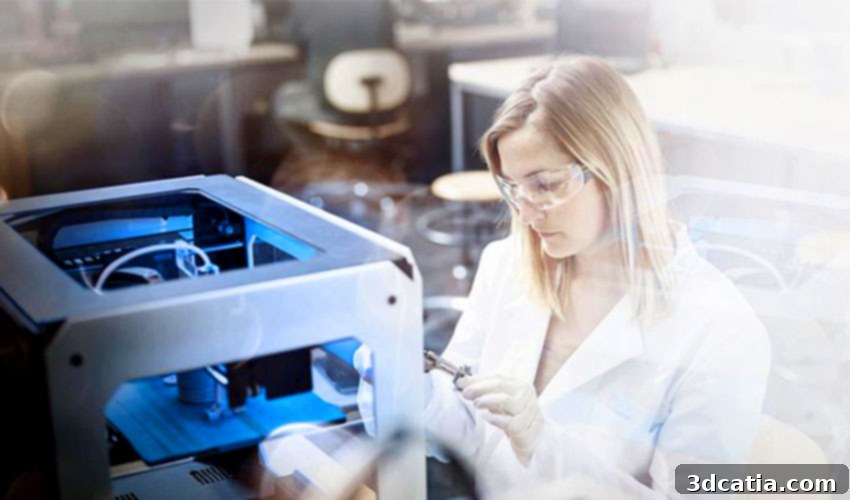
How Additive Manufacturing Became a Lifeline: 3D Printing’s Pivotal Role in Navigating Global Crises and Medical Supply Chain Disruptions
The onset of the COVID-19 pandemic plunged industries worldwide into unprecedented uncertainty, revealing profound vulnerabilities within global supply chains. While the crisis originated and began to resolve in China, its ripple effects spread rapidly across other continents, necessitating widespread lockdowns and social distancing measures. These essential governmental interventions, designed to curb viral transmission, compelled countless employees to work from home, inevitably leading to significant reductions in both production and consumption. The economic fallout from these measures has been substantial, impacting numerous sectors and underscoring the fragility of interconnected global systems.
Amidst this widespread disruption, one sector experienced an exponential surge in demand rather than a slowdown: medical and healthcare. Hospitals and their dedicated staff found themselves under immense pressure, battling an alarming influx of COVID-19 patients requiring critical medical assistance. A pressing global issue quickly emerged: the severe shortage of essential medical equipment. Vital supplies such as protective masks, face shields, and life-saving ventilators were in critically short supply, leaving healthcare professionals and patients dangerously exposed. It was in this dire context that 3D printing companies globally stepped forward, leveraging their agile manufacturing capabilities to provide crucial support, all while diligently managing their own operations and prioritizing the safety of their teams.
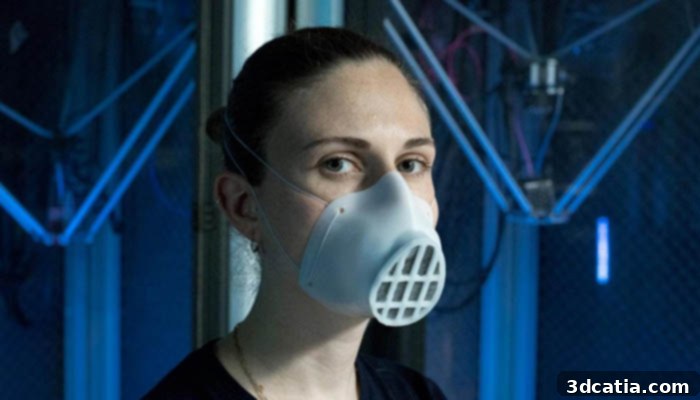
This global pandemic fundamentally reshaped nearly every facet of society, promising long-lasting impacts on economies and supply chain strategies for years to come. The crisis served as a crucible, testing the resilience and adaptability of various industries. For the additive manufacturing (AM) sector, it presented both unprecedented challenges and unique opportunities. To gain deeper insights into how the 3D printing industry navigated these turbulent waters, we engaged with leading AM companies eager to share their experiences regarding the direct effects of COVID-19 on their operations, alongside their vision for the broader implications this period holds for the future of 3D printing as a whole.
Resilience and Recovery: The Additive Manufacturing Industry’s Response
China’s Pioneering Recovery: AM Companies Regain Momentum
The global journey through the COVID-19 crisis began with the first registered case in China, traced back to November 17th. Over subsequent months, the nation recorded 81,340 cases and 3,292 deaths, prompting the Chinese government to implement some of the most stringent and radical measures globally. A comprehensive quarantine was declared on January 23rd, effectively halting all travel in and out of Wuhan, the epicenter. This lockdown soon expanded to encompass 15 cities within Hubei province, impacting approximately 57 million people. Initial economic reports highlighted the immediate severity of these actions, with retail sales plummeting by an estimated 20.5% during the early months of 2020. However, as the situation stabilized, restrictions were gradually lifted, allowing businesses, including those in the additive manufacturing sector, to slowly resume operations and begin their path to recovery.
Farsoon Technologies, a prominent Chinese manufacturer and supplier of SLS and DMLS 3D printers, headquartered in Changsha, offered a firsthand account of the evolving situation. Chenlu Fang, the Global Marketing Manager, shared insights into their operational status: “Since the virus crisis in China is close to an end, currently all 300 staff are back at work in our Headquarters. The impact is diminishing, and we are now primarily experiencing some minor delays from our suppliers as the entire ecosystem recalibrates.” She further acknowledged the disparity between local and global conditions: “However, the global situation remains significantly different, with our Farsoon Europe office in Stuttgart, Germany, and Farsoon Americas in Austin, Texas, currently facing impacts, especially concerning logistics and international travel.” To mitigate these challenges, the company strategically maintains local warehouses in both Germany and the US, providing a crucial buffer against supply chain disruptions. Chenlu Fang affirmed their preparedness: “Both international offices still maintain full functionality for sales, marketing, and remote technical support, demonstrating our robust infrastructure. We are well prepared for the upcoming changes and continue to adapt swiftly.”
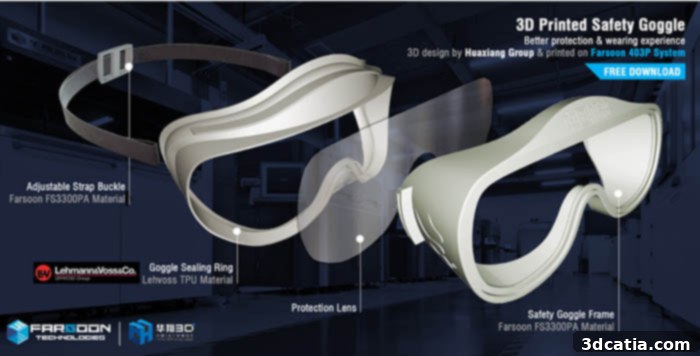
In the face of the burgeoning health crisis, Farsoon Technologies quickly recognized the immense potential of 3D printing as an emergency solution to address the critical shortage of medical equipment. “As a committed member of the global 3D printing community, we firmly believe that additive manufacturing can provide vital support when traditional supply chains become overburdened or fail,” Chenlu Fang explained. “During the peak of the outbreak in China, we collaborated intensely with our industrial partners to offer as much aid as possible.” Demonstrating their commitment to collaborative problem-solving, Farsoon took the proactive step of making **design files freely available for download**, empowering individuals and local facilities to produce essential tools. These open-source designs included crucial items like facial mask adjusters and safety goggles. At the height of the crisis, Farsoon Technologies itself utilized its capabilities to 3D print thousands of safety goggles, directly contributing to the protection of frontline workers.
Another key player in China, INTAMSYS, a leading manufacturer of 3D printers specializing in high-performance materials, echoed Farsoon’s sentiments regarding the gradual resolution of the situation. Maxime Pages, Manager at INTAMSYS, elaborated on their operational adjustments: “Here in China, where our primary operations are based, our production has largely returned to normal. The past two months were characterized by significant uncertainty and the necessity of implementing rigorous measures. Our employees initially worked from home, and travel was severely restricted. Today, we operate under strict new protocols, including comprehensive disinfection of the working environment, mandatory temperature checks twice daily for all staff, compulsory wearing of masks, and widespread availability and use of hand sanitizer.” Despite the internal recovery, Pages acknowledged the lingering global challenges: “Business-wise, a substantial degree of uncertainty persists, largely due to the ongoing disruption affecting the global supply chain. We are continuously monitoring the situation and adapting our strategies accordingly.”
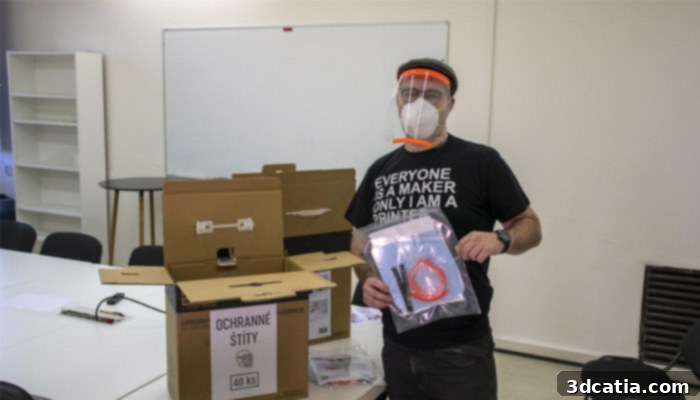
The crisis served as a stark demonstration, both in China and worldwide, of the indispensable role 3D printing technologies can play in swiftly and effectively addressing critical supply chain vulnerabilities. Maxime Pages emphasized this point: “Many highly promising initiatives are being rapidly established, such as the decentralized production of 3D printed masks, essential medical devices, and protective medical shields, all geared towards combating the virus.” He added, “On our part, now that our production here in China is back to normal, we have initiated efforts to send vital supplies like masks and hand sanitizers to our international partners. Given that many countries are currently experiencing severe shortages of these items, we believe this is the most impactful contribution we can make at this moment.” This proactive approach highlights the AM industry’s capacity for global solidarity and rapid deployment of resources.
Global Mobilization: Ensuring Safety and Supporting the Medical Community
While the COVID-19 crisis undoubtedly cast a negative shadow over the global economy and many industries, it simultaneously illuminated a profoundly positive aspect: the extraordinary level of support and innovation provided by additive manufacturing companies. Organizations like Materialise, Ultimaker, 3D Hubs, Stratasys, HP, 3D Systems, Makerbot, BCN3D, Xometry, Formlabs, and many others rapidly mobilized their resources and expertise to meet the urgent needs of the medical sector. To better understand these adaptive strategies, we spoke with Formlabs, a leading US-based 3D printing company, about how they adjusted to the evolving global situation.
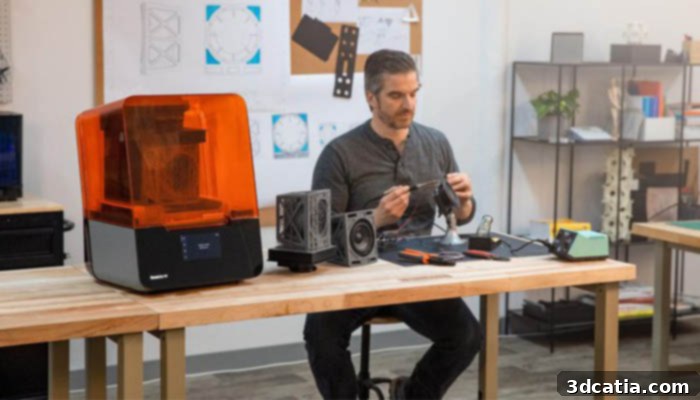
César Santos, EMEA Manager at Formlabs, detailed their comprehensive approach: “Our paramount concern has been, and continues to be, ensuring the safety and overall well-being of our employees. We promptly instituted work-from-home policies wherever feasible, significantly limited all non-essential employee travel, and implemented extensive precautions across all our facilities to mitigate the spread of the virus.” Beyond employee safety, Formlabs focused on business continuity: “Secondly, as a robust business entity, we deployed various measures to ensure our company could continuously meet the critical needs of our customers and the broader market. We are fortunate that Formlabs’ production and manufacturing operations have experienced only minimal impacts so far. Furthermore, those specific areas of our supply chain that were initially affected are rebounding quickly as more factories reopen throughout the impacted regions.” Santos highlighted their strategic resilience: “Formlabs proactively maintains a surplus of inventory in our warehouses, creating a crucial safety net for unpredictable situations like this, where global supply chains face unprecedented challenges or interruptions. This is bolstered by our strong network of reliable supply chain partners.” He concluded by emphasizing their outward focus: “And finally, Formlabs is actively seeking and implementing innovative ways to directly assist the medical community in addressing the multifaceted challenges of the overall COVID-19 epidemic.”
The pervasive impact of the COVID-19 crisis is expected to fundamentally reshape not just the 3D printing industry but a multitude of sectors globally. César Santos elaborated on this transformative potential, stating, “I firmly believe this event is going to fundamentally change a lot of different industries. We’ve already seen a significant number of individuals and organizations actively utilizing their 3D printing resources, expertise, and skills to provide critical aid.” He continued, “We are convinced that the profound way 3D printing can contribute to reducing the devastating impact of this crisis is significant and will undoubtedly contribute to a substantial increase in public and industrial awareness about the immense capabilities and potential of the 3D printing industry in general.” The community’s response to the Formlabs Support Network for COVID-19 was overwhelmingly positive and immediate. Within an astonishing 48-hour window, Formlabs received nearly 500 responses from individuals and organizations volunteering their assistance. Formlabs has since been actively collaborating with several dozen medical and healthcare organizations, providing crucial support for their COVID-19 specific projects, ranging from testing swabs to ventilator components and personal protective equipment.

While larger corporations possess more resources to weather such storms, smaller companies and startups often face magnified impacts. Additive America, an innovative startup dedicated to advancing the prosthetics industry into the digital manufacturing age using 3D printing technologies, specifically leveraging HP’s Multi Jet Fusion process, provided insights into their unique challenges. Zac Holcomb, one of Additive America’s co-founders, shared their operational strategy: “We are rigorously limiting our exposure to others, but importantly, we remain fully operational thanks to our robust in-house printing capabilities. Navigating this unprecedented period as a startup company will continue to present challenges, but we are maintaining a positive outlook, especially after a remarkably strong start to the year. We are optimistic that conditions will normalize within a month or so.” He highlighted their unwavering commitment to customer service: “We are currently available 24/7, as we have always been for our customers, offering our direct cell numbers and welcoming calls or texts around the clock!” Addressing preparedness, Holcomb added, “We have proactively stocked up on all necessary supplies and firmly plan to emerge from this crisis in an even stronger position. We have also offered all our employees the flexibility to work from home as much as they desire. Our core operational staff is small and forms a tightly-knit, highly efficient team, adeptly handling all essential tasks. Overall, for us, it’s largely business as usual, and we are strategically utilizing this period of reduced external activity to double down on our foundational belief that social media content will continue to be king in engaging with our community and driving future growth.”
The Enduring Legacy: 3D Printing’s Future in a Post-Pandemic World
The COVID-19 pandemic served as an unexpected catalyst, accelerating the adoption and recognition of additive manufacturing across various industries, particularly in healthcare. It underscored the critical need for flexible, localized, and resilient supply chains capable of responding rapidly to unforeseen disruptions. The agility of 3D printing, its ability to produce complex designs on-demand, and its potential to decentralize manufacturing have moved from niche advantages to undeniable strategic imperatives. As the world moves beyond the immediate crisis, the lessons learned are profound. We anticipate a sustained focus on strengthening local manufacturing capabilities, reducing reliance on single-source global supply chains, and integrating AM more deeply into emergency preparedness strategies for governments and corporations alike. The crisis has not only highlighted the technological capabilities of 3D printing but also the collaborative spirit of the AM community, which rose to the occasion with innovative solutions and unwavering support for frontline efforts.
We invite you to share your thoughts on the remarkable ways additive manufacturing companies responded to the unprecedented COVID-19 crisis. What do you believe are the most significant long-term implications for the industry? Let us know your insights in a comment below or join the conversation on our Facebook and Twitter pages! Don’t miss out on the latest advancements and news in the world of 3D printing – remember to sign up for our free weekly Newsletter, delivered directly to your inbox!