
MakerOS: Revolutionizing Digital Fabrication and 3D Printing Workflows for Unprecedented Collaboration
In the competitive landscape of modern manufacturing, particularly within the dynamic field of digital fabrication and 3D printing, seamless collaboration between internal teams is not just an advantage—it’s a necessity. Companies often grapple with significant operational hurdles when their sales and engineering departments operate in silos, leading to inefficient project delivery, missed opportunities, and ultimately, stifled growth. Despite the critical need for unified efforts, these two essential pillars of any fabrication business frequently experience communication breakdowns and disjointed workflows. Recognizing this pervasive challenge, MakerOS stepped forward in 2015 with its pioneering collaboration platform designed specifically for fabrication companies, with a keen focus on the unique demands of 3D printing service providers. Following continuous development and user-driven enhancements, the platform saw a significant leap with the release of version 2.0. This evolution underscores a high market demand for a comprehensive solution that empowers businesses to efficiently manage multiple complex projects concurrently, ensuring that from initial client inquiry to final product delivery, every step is synchronized and transparent.
The Challenge: Bridging the Gap Between Sales and Engineering in Fabrication
At the heart of many fabrication companies’ inefficiencies lies a fundamental disconnect between their sales and engineering processes. While sales teams meticulously manage their pipelines, tracking prospects and forecasting potential deals, these insights often remain isolated from the production floor. Similarly, engineering teams, immersed in the intricate details of design, material selection, and manufacturing, frequently lack real-time visibility into client expectations or the commercial implications of project adjustments. This operational fragmentation becomes acutely problematic as a company scales; beyond a certain threshold of projects, manually syncing these critical departments becomes nearly impossible. The result is a cascade of issues: sales teams struggle to provide accurate updates to clients because they’re not looped into project statuses, leading to frustrating delays and a reliance on ad-hoc inquiries to the engineering team—a process that is far from ideal and drains valuable resources from both sides.
Almost every fabrication business, especially those specializing in additive manufacturing, establishes a system for onboarding new projects and another for their subsequent production. However, the crucial flaw is often the absence of a unified interface where the sales pipeline and the production workflow converge. The sales team might have a clear visual representation of where each prospect stands in the sales journey, allowing them to predict revenue and workload. Yet, when these deals convert into actual projects, assigning them to production often involves a manual transfer of information, which is prone to errors and delays. This creates a “black box” effect where project details can become opaque once they leave the sales domain. Without a centralized system, communication becomes reactive rather than proactive, project visibility diminishes, and the potential for costly miscommunications or scope creep escalates, directly impacting client satisfaction and a company’s bottom line.
The Pitfalls of Fragmented Project Management and Invoicing
While various project management (PM) solutions exist, they often fail to address the core problem of a fragmented workflow in fabrication. Typically, sales data is first captured and managed within a separate Customer Relationship Management (CRM) tool. Only after a deal is secured is this data manually transferred, or sometimes redundantly entered, into a PM application for tracking the actual work. This scenario forces teams to navigate between two distinct software platforms: one for sales process management and another for execution tracking. Beyond the inherent inefficiencies of data duplication and the cost of maintaining multiple subscriptions, this separation often leads to outdated information or a partial view of the project’s lifecycle. Sales teams might receive updates on project status, but at the expense of constantly toggling between systems, which introduces friction and reduces productivity.
Adding another layer of complexity to this already fragmented ecosystem is the critical process of invoicing. This is arguably one of the most vital elements in the entire project lifecycle, as both sales and engineering teams must be perfectly aligned to ensure that the correct invoice is dispatched to the customer. Pricing can frequently be adjusted during production due to changes in material costs, design modifications, or unforeseen complexities, making real-time synchronization paramount. In most traditional setups, invoicing necessitates the use of yet another dedicated software application, introducing a third point of potential data discrepancy and administrative burden. Furthermore, the invoicing process is rarely automated; invoices are typically generated manually and then sent via email, consuming valuable time and increasing the risk of human error. This multi-software approach not only escalates operational costs but also creates bottlenecks, delays payment cycles, and detracts from a company’s ability to scale efficiently in the fast-paced world of digital manufacturing.
Introducing MakerOS: A Unified Platform for Digital Fabrication
What’s the solution from MakerOS?
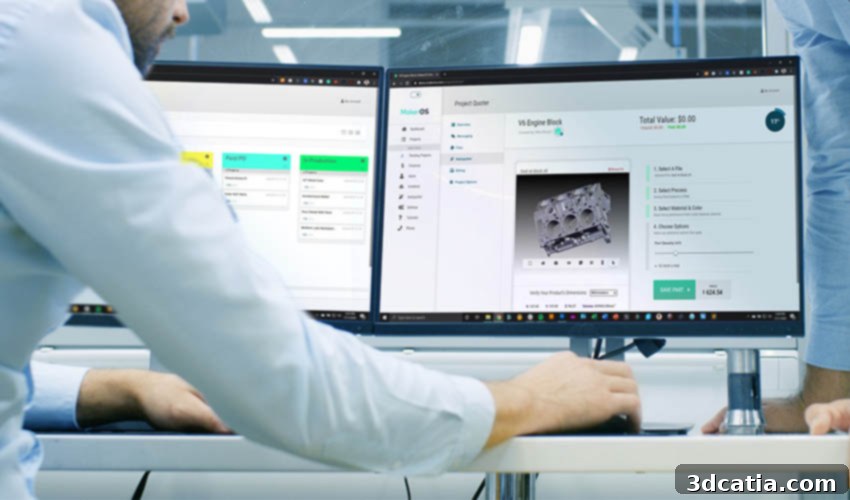
Having meticulously analyzed and identified the core challenges that fabrication companies, particularly those in the additive manufacturing sector, frequently encounter, MakerOS engineered an innovative online software solution. This platform fundamentally reshapes operational efficiency by seamlessly combining the sales pipeline with the production workflow into a single, cohesive environment. The MakerOS online platform addresses the previously fragmented processes by offering two powerful, interconnected solutions: the Autoquoter and the Project Board. These tools are designed to eliminate information silos, streamline communication, and provide unparalleled transparency across all stages of a project, from initial inquiry to final delivery and invoicing. By integrating these critical functions, MakerOS empowers companies to overcome the limitations of disparate systems, fostering a truly collaborative and efficient work environment tailored for the demands of modern digital fabrication.
Core Features of MakerOS: Driving Efficiency and Collaboration
The Autoquoter: Intelligent, Automated Quoting for Precision and Speed
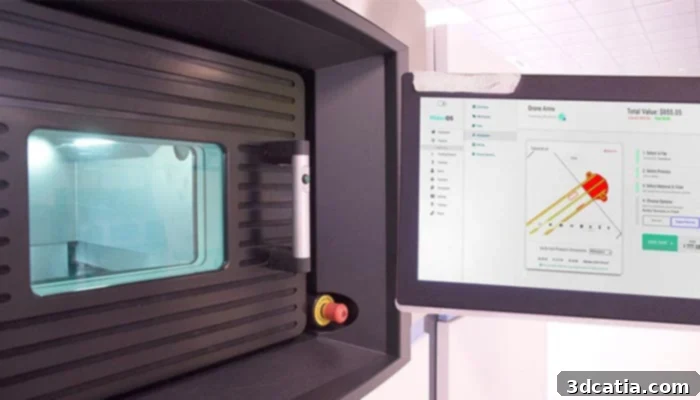
The MakerOS Autoquoter is a groundbreaking tool that transforms the traditionally time-consuming and often manual quoting process into an automated, precise, and rapid experience. Both sales and engineering teams have full access to its capabilities. When a client submits a project, all necessary data is collected within the Autoquoter, enabling an intelligent, automated system to generate accurate quotes. This not only significantly accelerates the response time to client inquiries but also directly informs the engineering team about the specific requirements of the part that needs to be created. Furthermore, the Autoquoter provides clients with a transparent and detailed cost analysis of their parts, fostering trust and clarity from the outset. Crucially, given the multi-faceted nature of 3D printing and other fabrication processes—which involve numerous parameters like technology type, design complexity, material selection, and finishing requirements—the Autoquoter has been developed with immense flexibility. Its intuitive and customizable design allows companies to configure specific rules and automation. For example, businesses can set criteria so that only eligible or validated quotes are forwarded to the sales and engineering teams, ensuring that resources are focused on viable projects and reducing wasted effort on unfeasible requests. This smart automation empowers businesses to manage a higher volume of inquiries with greater accuracy and less manual intervention.
The Project Board: A Central Hub for Omniscient Production Workflow Management
Complementing the Autoquoter, the MakerOS Project Board serves as the central nervous system for all ongoing projects, providing a truly omniscient view of every detail. Within this unified interface, the real-time status of any project can be viewed by anyone within the company, from sales representatives to engineers and project managers. This includes access to all respective files, messages, quotes, and billing information, eliminating the need to search through emails or disparate cloud storage solutions. The Project Board meticulously centralizes all project-related communications and documentation, drastically improving internal communication and reducing information asymmetry. Furthermore, MakerOS extends this transparency to clients through their dedicated Client Portal. Through this secure portal, clients can submit new projects, track the progress of their existing orders, view project updates, and communicate directly with their service provider. This level of transparency on a per-client and per-project basis ensures that everyone involved—internal teams and clients alike—is consistently on the same page, fostering better collaboration, reducing misunderstandings, and significantly enhancing customer satisfaction. This centralized, comprehensive view is instrumental in optimizing the production workflow and enabling efficient resource allocation. To witness the Autoquoter and Project Board in action, interested parties can explore a practical demonstration HERE.
The Client Portal: Empowering Customer Engagement and Streamlined Submissions
The Client Portal within MakerOS is more than just an access point; it’s a strategic tool designed to empower customers and streamline the entire client interaction process. Instead of traditional, often cumbersome methods of project submission via email attachments or external file-sharing services, clients can effortlessly upload their designs and project specifications directly through a secure and user-friendly interface. This dedicated portal allows them to monitor the live status of their projects, review quotes, approve changes, and communicate directly with their service provider, all within a single, organized environment. This level of self-service and transparency significantly reduces the administrative burden on the fabrication company’s internal teams, as clients have instant access to information that previously required direct communication. By offering this streamlined channel for engagement, the Client Portal not only enhances customer experience but also cultivates stronger relationships, ensuring clients feel informed and in control throughout the fabrication journey. It transforms the client-provider dynamic into a more collaborative partnership, further optimizing the overall workflow for digital manufacturing.
Seamless Integration and Future-Proofing Your Fabrication Business
Understanding that modern businesses often rely on a suite of specialized tools, MakerOS has meticulously engineered its platform to facilitate seamless integration with many popular and essential applications. To provide the most efficient and robust solution possible, MakerOS allows users to connect with tools they are already familiar with and depend on, such as Dropbox for file sharing, Slack for instant communication, WordPress for website management, and OneDrive for cloud storage, among many others. This commitment to interoperability ensures that companies can leverage their existing tech stack while benefiting from the centralized power of MakerOS. The overarching goal remains clear: to centralize all critical processes and data under one comprehensive roof. This strategic integration not only optimizes internal collaboration and communication but also significantly enhances the overall production workflow for any fabrication company, with particular benefits for 3D printing service providers who often manage diverse file types and complex project parameters. By consolidating operations, MakerOS helps businesses eliminate redundancy, reduce manual data entry, and minimize the friction typically associated with juggling multiple software solutions. This centralized approach streamlines operations, boosts productivity, and ultimately future-proofs the fabrication business by providing a scalable and adaptable platform for continuous growth in the ever-evolving digital manufacturing landscape. To delve deeper into the full spectrum of capabilities offered by the platform, make sure to visit MakerOS’s official website.
Why MakerOS is Essential for 3D Printing Service Providers and Modern Fabrication
For 3D printing service providers, managing projects is uniquely complex due to the myriad of parameters involved, including specific print technologies, intricate design complexities, diverse material choices, and various post-processing requirements. MakerOS, with its intelligent Autoquoter and transparent Project Board, is specifically tailored to navigate these complexities, offering a solution that traditional project management tools often overlook. It provides the granular control and detailed tracking necessary to accurately quote, produce, and deliver custom 3D printed parts, ensuring consistency and quality. Beyond 3D printing, any modern fabrication company striving for operational excellence in today’s fast-paced environment can significantly benefit from MakerOS’s unified platform. By centralizing sales, engineering, and project management, it eliminates costly communication gaps, reduces administrative overhead, and accelerates project turnaround times. This not only enhances internal efficiency but also dramatically improves customer satisfaction through increased transparency and reliable project delivery. MakerOS positions itself not just as a software provider, but as a strategic partner enabling fabrication businesses to embrace digital transformation, scale effectively, and maintain a competitive edge in an increasingly automated and interconnected industry.
What are your thoughts on MakerOS’s innovative solution for unifying fabrication workflows? We invite you to share your comments and insights below or engage with us on our Facebook and Twitter pages. Stay informed about the latest advancements and news in the world of 3D printing by signing up for our free weekly Newsletter, delivered directly to your inbox!