
Revolutionizing Manufacturing: Cobalt Extreme’s Synthetic Metal Blends 3D Printing with Injection Molding
Australian innovator Cobalt Extreme has unveiled a groundbreaking manufacturing technology that masterfully **combines the precision of 3D printing with the efficiency of injection molding**. This pioneering approach is specifically engineered to advance the design and production of innovative artificial lift equipment, crucial for optimizing oil extraction processes. Through this ingenious integration, Cobalt Extreme has developed an entirely new **material concept known as Synthetic Metal**. While originally conceived to withstand the extreme environments prevalent in deep oil wells, this revolutionary concept holds immense potential to unlock a myriad of applications across diverse new markets, pushing the boundaries of material science and engineering.
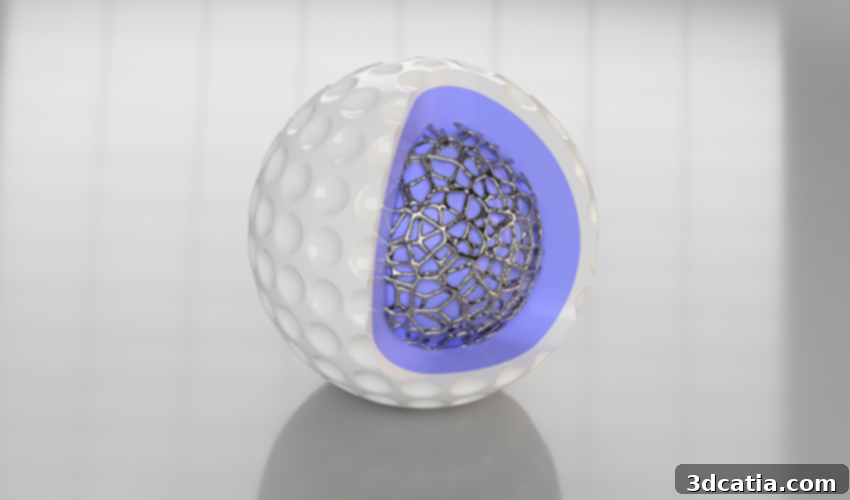
At its core, Synthetic Metal represents a sophisticated hybrid material, meticulously fabricated by injection molding a unique, high-performance polymer in and around a pre-fabricated, metal 3D printed endoskeleton. David Nommensen, a key figure in Cobalt Extreme, eloquently elaborates on the profound advantages inherent in such a synergistic method. He explains, “The injection molded polymer, enveloping and permeating the metal endoskeleton, not only acts as a superb insulator by being non-conductive but also contributes a wealth of other benefits characteristic of advanced injection molded materials.” These remarkable properties include exceptional abrasion resistance, resilient deformation capabilities, cost-effectiveness in production, superior impact resistance, inherent non-corrosive characteristics, robust chemical resistance, and significant weight savings. Essentially, Cobalt Extreme’s pioneering technology seamlessly merges the vital electronic characteristics of metal—such as structural integrity and potential conductivity (when desired for the endoskeleton)—with the unparalleled engineering properties of advanced polymers.
The Genesis of Synthetic Metal: A Hybrid Manufacturing Breakthrough
The innovative fusion of additive manufacturing (3D printing) and traditional injection molding represents a significant leap forward in material science. This hybrid approach capitalizes on the strengths of both processes. 3D printing allows for the creation of incredibly complex, lightweight, and custom-designed metal geometries that would be impossible or prohibitively expensive to produce with conventional manufacturing methods. These intricate structures form the “skeleton” of the Synthetic Metal. Subsequently, injection molding enables the rapid, high-volume encapsulation of these metal skeletons with advanced polymers, adding a protective, functional, and aesthetically pleasing outer layer. This combination provides design freedom, material optimization, and enhanced performance, challenging long-held assumptions about material limitations. David Nommensen illustrates this fundamental necessity by stating, “Just imagine a human body without a skeleton,” underscoring the critical structural role the metal endoskeleton plays in imparting superior mechanical properties and adding strength to the final part.
Unpacking Synthetic Metal: Composition and Unrivaled Benefits
The careful selection of both the metal for the endoskeleton and the polymer for encapsulation is paramount to Synthetic Metal’s performance. The metal component, typically an advanced alloy, is chosen for its strength, rigidity, and desired conductive properties. The polymer, on the other hand, is selected for its insulating properties, chemical inertness, flexibility, and resistance to wear and tear. This dual-material composition creates a composite that transcends the limitations of its individual components. The polymer layer provides excellent resistance against environmental degradation, including harsh chemicals and abrasive particles often found in industrial settings, while the internal metal structure ensures the necessary load-bearing capacity and structural integrity.
The array of benefits offered by Synthetic Metal is extensive and addresses numerous challenges faced in demanding applications. Its inherent **abrasion resistance** prolongs the lifespan of components in high-wear environments. The **resilient deformation** property allows parts to absorb impacts and recover their original shape, reducing the risk of permanent damage. From a commercial standpoint, the potential for **cost savings** is significant, as the optimized material usage and enhanced durability lead to fewer replacements and less maintenance. The **impact resistance** safeguards against sudden shocks, while its **non-corrosive** nature eliminates a major failure point in many industrial systems, particularly in the Oil & Gas sector. Furthermore, its robust **chemical resistance** ensures functionality even when exposed to aggressive substances, and the substantial **weight savings** contribute to improved energy efficiency and reduced transportation costs, making it an economically and environmentally appealing solution. The synergistic blend of metal’s structural strength with the protective and insulating qualities of the polymer creates a material concept that is truly unique.
Combating Corrosion: Synthetic Metal’s Impact in the Oil & Gas Sector
The Oil & Gas industry presents one of the most challenging environments for materials, with corrosion being a pervasive and costly issue. In this sector, David Nommensen highlights that conventional methods for mitigating corrosion in oil and gas wells typically involve either preventative coatings, such as epoxy or thermal spray metal coatings, or the continuous injection of liquid corrosion inhibitors, which are chemical treatments. While these methods offer some protection, they often come with their own limitations, including application complexities, limited durability, and environmental concerns associated with chemical usage. The constant presence of water, coupled with corrosive chemical compounds like CO2, O2, and H2S, makes metal components in oil wells highly susceptible to rapid degradation, leading to equipment failure, production downtime, and significant financial losses.
Addressing these critical challenges, Cobalt Extreme developed **Synthetic Metal sucker rod guide anodes**. Sucker rods, essential components in artificial lift systems, are particularly vulnerable to corrosion as they act as a magnet for corrosive reactions in the harsh well environment. By integrating Synthetic Metal into these guides, the company has introduced an ingenious solution. These guide anodes function as electrical conductors that allow a conventional current to enter a polarized electrical device. Critically, the innovation leverages the principle of sacrificial anodes, where the corrosion process is deliberately concentrated on the Synthetic Metal anode itself, thereby **protecting the more expensive and structurally vital tubing and sucker rods** from degradation. This targeted sacrificial corrosion mechanism significantly extends the operational lifespan of well infrastructure, enhancing safety and reducing maintenance expenditures.
Simplifying the complex engineering behind it, David Nommensen clarifies: “The Synthetic Metal innovation harnesses advanced additive manufacturing technologies to meticulously combine proven anode metallurgy with cutting-edge Arpmax polymer technology.” The result is a sophisticated polymer composite that embodies the desirable electrical, thermal, and conductive properties of metal, coupled with the inherent structural strength it provides. This strategic integration not only solves the corrosion dilemma but also enhances the overall durability and efficiency of artificial lift equipment in demanding downhole conditions. The longevity and reliability offered by Synthetic Metal represent a paradigm shift in how the Oil & Gas industry approaches asset integrity and operational sustainability, promising a future of reduced intervention and increased productivity.
Precision Manufacturing: The Role of 3D Printing in Synthetic Metal Production
The fabrication of the intricate metal structure, which forms the core of Synthetic Metal, is accomplished using advanced 3D printing technology. Specifically, Cobalt Extreme employs the **ProX DMP 320 from 3D Systems**. This industrial-grade system is based on Direct Metal Printing (DMP), also widely recognized as Laser Powder Bed Fusion (LPBF). This additive manufacturing technique is celebrated for its ability to produce highly complex geometries with exceptional precision and material density, making it ideal for creating the elaborate endoskeletons required for Synthetic Metal.
The DMP process involves a high-precision laser meticulously directed onto a bed of fine metal powder particles. In a carefully controlled environment, the laser selectively melts and fuses these particles, building up thin horizontal metal layers one after another. This layer-by-layer approach allows for the creation of intricate internal channels, optimized lattice structures, and custom designs that are impossible to achieve with traditional subtractive manufacturing methods. The ability to precisely control the internal architecture of the metal endoskeleton is critical for maximizing its mechanical properties, ensuring optimal stress distribution, and guaranteeing perfect integration with the subsequent injection molded polymer. This level of control is fundamental to the performance and durability of Synthetic Metal.

The ProX DMP 320 from 3D Systems, integral to Synthetic Metal’s production.
Beyond Oil & Gas: Expanding Horizons for Hybrid Materials
While its initial application focuses on the demanding conditions of oil fields, the potential of Synthetic Metal extends far beyond the Oil & Gas sector. As David Nommensen aptly concludes, “The Synthetic Metal technology also has significant non-oil field applications for industries seeking a polymer with the electrical, thermal conductivity, and structural strength traditionally found only in metal.” This statement opens the door to a vast array of possibilities across numerous industries that constantly seek materials combining seemingly contradictory properties.
Imagine applications in the **aerospace industry**, where lightweight yet structurally robust and electrically insulating components could lead to more fuel-efficient aircraft. In the **automotive sector**, Synthetic Metal could enable lighter vehicle chassis parts that offer enhanced impact protection and corrosion resistance, or even advanced battery casings that require specific thermal management and electrical isolation. The **medical device industry** could benefit from custom implants or surgical tools that require bio-compatibility, specific conductivity, and high strength. Furthermore, in **electronics**, the ability to create insulating structures with integrated conductive pathways at a microscopic level could revolutionize circuit board design and device miniaturization. Even in consumer goods, the blend of aesthetics, durability, and functional properties could lead to innovative product designs. The versatility of Synthetic Metal underscores its potential to become a cornerstone material in advanced manufacturing across the globe.
The Future of Manufacturing: Innovation at Cobalt Extreme
The development of Synthetic Metal by Cobalt Extreme is definitely an interesting material innovation, showcasing the power of cross-disciplinary engineering and advanced manufacturing techniques. By merging the best attributes of 3D printing and injection molding, the company has not only addressed a critical industry challenge in Oil & Gas but has also introduced a material concept that challenges conventional limits and inspires future advancements. This hybrid approach represents a significant step forward in material science, promising to redefine performance and durability across various industrial landscapes.
As industries worldwide continue to push the boundaries of design and functionality, materials like Synthetic Metal will play a pivotal role. Its ability to offer a unique combination of strength, light weight, corrosion resistance, and specific electrical or thermal properties within a single component heralds a new era of possibilities for engineers and designers. We invite you to explore the full story behind this remarkable innovation and consider the transformative impact it could have. What do you think of this new material development and its potential? Let us know in a comment below or connect with us on our Facebook and Twitter pages! Don’t miss out on the latest advancements in 3D printing and material science; sign up for our free weekly Newsletter to get the freshest news delivered straight to your inbox!